

Samarkand is one of the most famous cities in Uzbekistan and one of the places I was most excited to visit on our trip to Uzbekistan.
Often called the Jewel of the Silk Road, Samarkand has been an important crossroads for trade, culture and ideas for centuries. Today, you can still see that history everywhere, from the enormous madrasas of Registan Square to the blue-tiled mausoleums of Shah-i-Zinda.
But what surprised me was that Samarkand doesn’t feel like a city stuck in the past.
Beyond the famous monuments, there are busy streets, modern cafés, green parks and colourful markets where people are simply going about their everyday lives.
We visited Samarkand after travelling through Khiva and Bukhara, and although I loved both, Samarkand ended up being our favourite of the three.
In this guide, I’m sharing the best things to do in Samarkand, based on our own visit, as well as practical tips to help you plan your first trip.
To make planning easier, I’ve also created a free packing checklist to help you pack for Uzbekistan.
Download my free packing checklist
This post contains affiliate links, and if you click one, I may receive a small commission at no extra cost to you.
Samarkand at a Glance
Best for: Silk Road history, architecture, photography and local culture
How long to stay: 2–3 days
Don’t miss: Registan Square, Shah-i-Zinda and Gur-e-Amir
Best local experience: Exploring Siab Bazaar
Unique thing to do: Bread Making Class
Getting around: Walking and Yandex Go
Where we stayed: Karoy Plaza
How to Get Around Samarkand
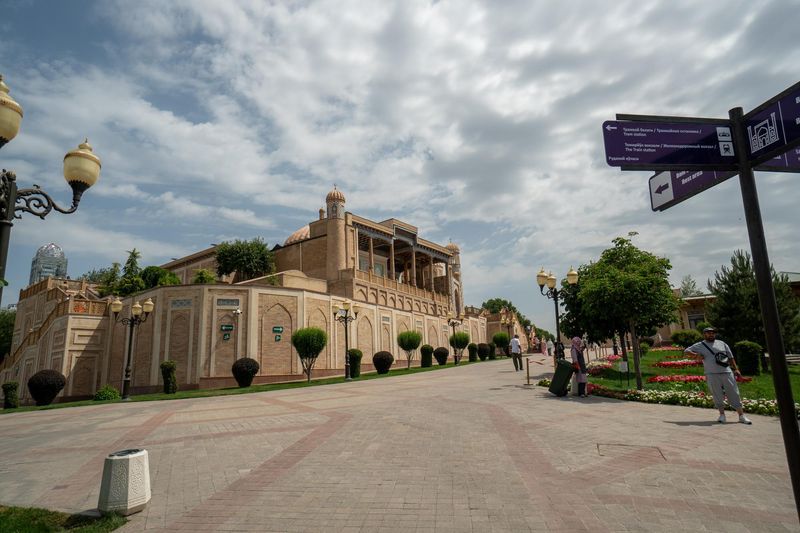
One important thing to know before visiting is that Samarkand's attractions aren't all next to each other.
Some sights are within easy walking distance, particularly around Bibi-Khanym Mosque and Siab Bazaar, but others can involve a 30-minute walk or even longer. We usually combined walking with taxis.
The easiest option for us was Yandex Go, which works in a similar way to Uber. You request the car through the app and see the price before confirming the ride.
You can pay through the app, but you can also choose to pay the driver in cash, which is useful if you don't want to add your card.
For places such as Ulugh Beg Observatory, taking a taxi saves a lot of time.
Where to Stay in Samarkand
There are plenty of places to stay in Samarkand, whether you want to be close to the main sights, prefer a smaller boutique hotel or want something more luxurious.
We stayed at Karoy Plaza, a modern hotel with a swimming pool and spa. It was a comfortable base for us and worked well for exploring the city.
If your priority is being close to the main attractions, Registan Palace is right by Registan Square. Recent guest reviews particularly praise its location, making it a convenient option if you want to explore much of historic Samarkand on foot.
If you prefer something smaller and more characterful, Sangzor Boutique Hotel is one of the highest-rated hotels in Samarkand on Tripadvisor, with a 4.8/5 rating at the time of writing.
For a more luxurious stay, Hilton Samarkand Regency has indoor and outdoor pools and is part of the modern Silk Road Samarkand complex. The trade-off is that it is farther from the historic centre, so you will rely more on taxis.
Best Things to Do in Samarkand
Explore Registan Square
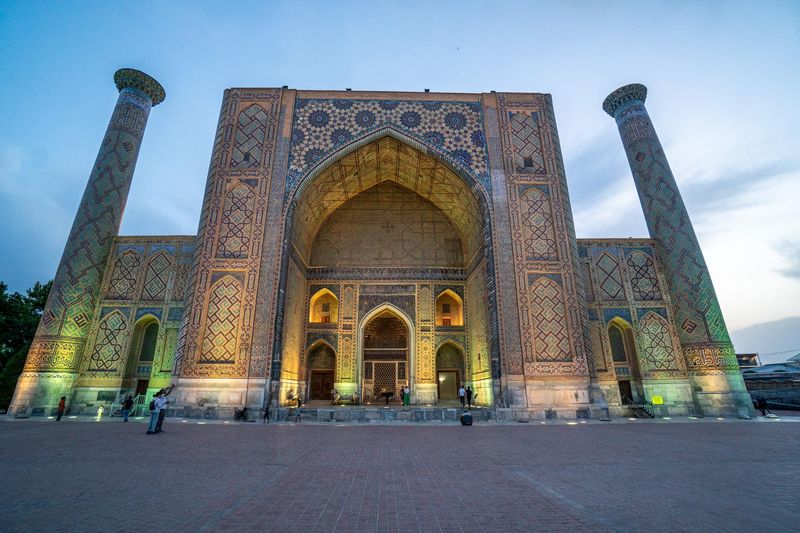
If you only recognise one image of Samarkand, it is probably Registan Square. This is the heart of historic Samarkand and easily one of the most impressive places we visited in Uzbekistan.
The word Registan roughly means a sandy place in Persian, and for centuries this square was much more than a collection of beautiful buildings.
Markets were held here, travellers passed through while following the Silk Road, scholars exchanged ideas and important public announcements took place in the square.
Today, Registan is surrounded by three magnificent madrasas.
Ulugh Beg Madrasa
On one side of the square is Ulugh Beg Madrasa, built during the 15th century.
Ulugh Beg was the grandson of Amir Timur, but unlike many rulers of his time, he became particularly famous for his interest in astronomy, mathematics and science.
His madrasa developed into an important centre of education.
Sher-Dor Madrasa
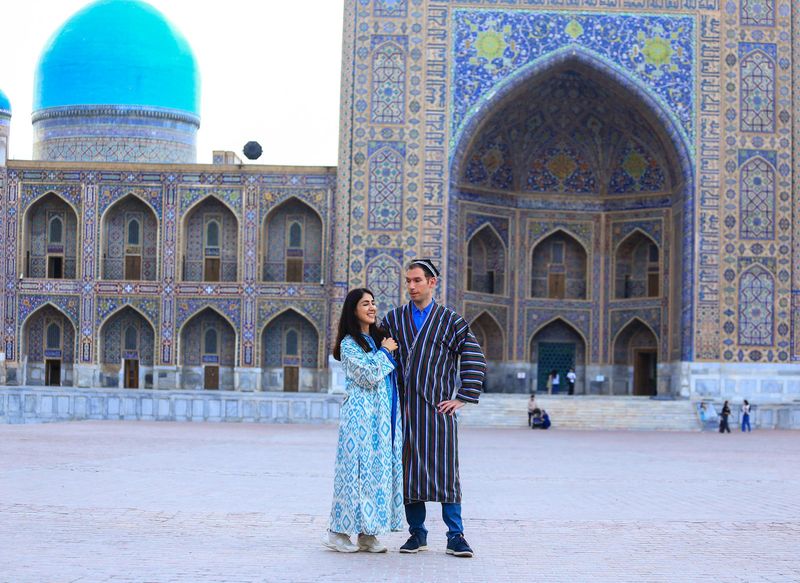
Directly opposite is Sher-Dor Madrasa, which was constructed later to mirror Ulugh Beg Madrasa.
One of the most unusual details is the pair of tiger-like animals decorating its façade.
Images of people and animals are uncommon in traditional Islamic religious architecture, which makes this design particularly distinctive.
The name Sher-Dor itself refers to the tigers.
Tilya-Kori Madrasa
Between them stands Tilya-Kori Madrasa. This building served as both a madrasa and a mosque, and its prayer hall is one of the most beautiful interiors in Registan.
The walls and ceiling are decorated with elaborate patterns and gold detailing.
Don't rush your visit here. We spent time exploring the courtyards, looking closely at the tilework and simply sitting and taking in the atmosphere.
I would allow at least an hour, but you could easily spend longer.
Visit Registan Later in the Day
Registan can get very busy and, during the warmer months, very hot. We decided to visit towards the end of the day, closer to closing time. By then, there were fewer people around and the temperature was much more comfortable.
It also made the whole experience feel more relaxed. Inside the madrasas, there are small shops selling souvenirs, drinks, tea and coffee, but we never felt pressured to buy anything.
We actually found the atmosphere surprisingly peaceful for such a famous tourist attraction.
Dress Up for Traditional Photos
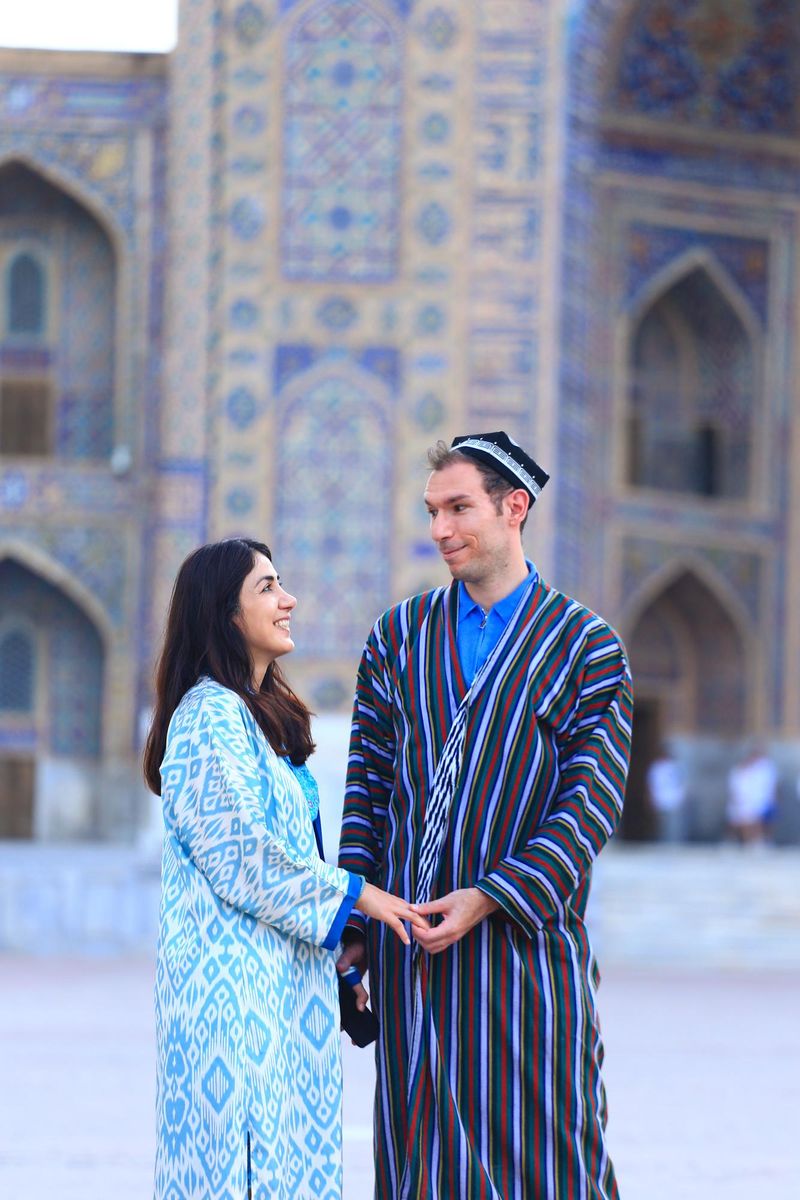
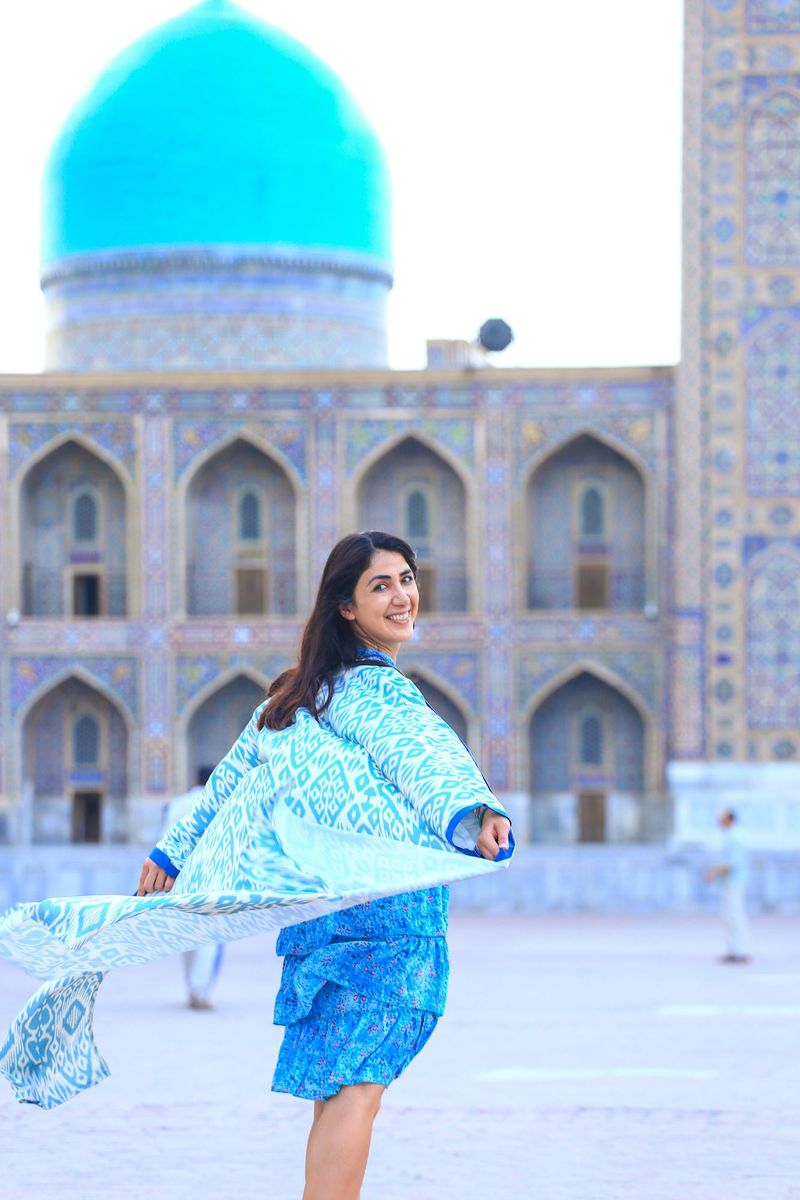
Normally, when we travel, we don't do many of the traditional costume photography experiences because we are usually too busy filming.
But when we visited Registan, it was quiet, and there wasn't a queue, so Bruno and I decided: why not?
We dressed up in traditional clothing and ended up with around 37 photographs plus one of those rotating videos where the camera circles around you.
We paid around 200,000 som, equal to £13 for the photoshoot.
Could we have negotiated? Probably. But it already felt inexpensive to us, so we didn't bother.
Climb a Registan Minaret; If You Get Very Lucky
This definitely isn't something I would promise you can do.
While we were filming inside Registan, someone noticed my camera and asked whether I had a YouTube channel. We were then offered the chance to climb one of the minarets.
It is not officially open as a normal visitor attraction, so I would not arrive expecting to be able to do this.
The climb itself was an adventure. The staircase became darker and narrower the higher we went; it was incredibly hot inside, and eventually there was barely enough room for one person.
At the very top, our heads were literally sticking out of the minaret.
There wasn't enough space for two people to stand comfortably, but the view across Registan was incredible. Going down wasn't much easier either.
It was one of those completely unexpected travel experiences that ended up becoming one of our favourite memories from Samarkand.
See Registan Square at Night
Even if you visit Registan during the day, I recommend coming back in the evening. We couldn't leave Samarkand without seeing it one last time.
At night, the buildings are illuminated, and the square feels completely different. Locals and visitors gather here to take photographs, walk around and enjoy the cooler evening air.
Depending on when you visit, you may also be able to see an evening light show.
If you have enough time in Samarkand, I would experience Registan both during daylight and after dark.
Visit Gur-e-Amir Mausoleum
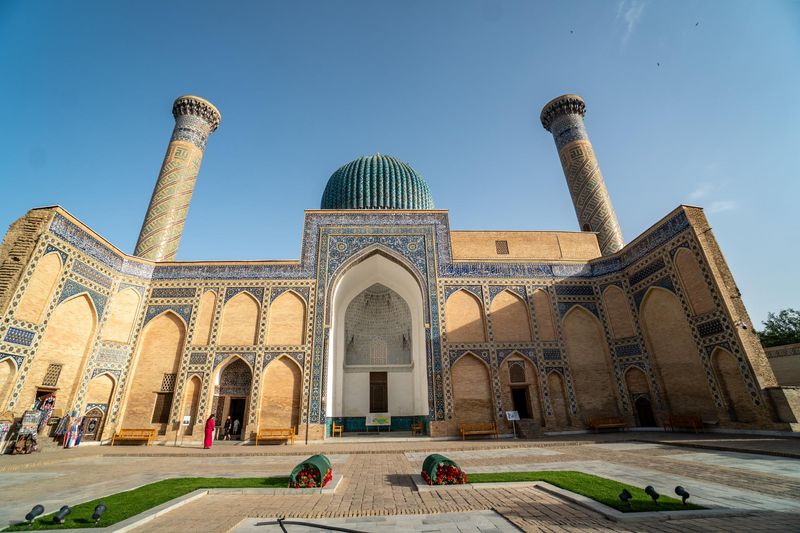
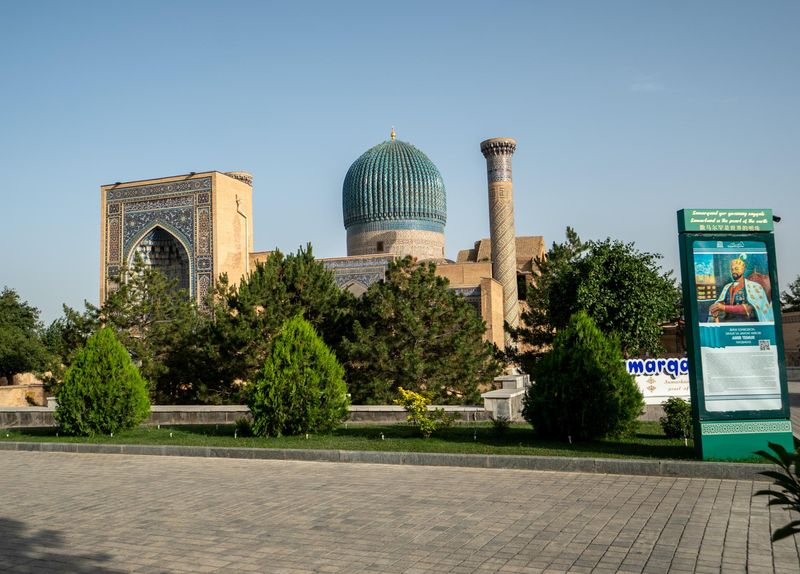
One of the best places to start understanding Samarkand is Gur-e-Amir, the mausoleum of Amir Timur.
Amir Timur, also known as Tamerlane, founded the Timurid Empire and made Samarkand his capital.
He wanted to transform the city into an extraordinary centre of power, culture and architecture, bringing craftsmen and architects from across his empire to work here. His influence is still visible throughout Samarkand today.
Gur-e-Amir is the final resting place of Amir Timur as well as several members of his family, including his grandson Ulugh Beg.
The building itself is impressive, with its blue dome and richly decorated interior.
Visiting Gur-e-Amir early in our time in Samarkand also helped put many of the other monuments into context because Amir Timur's legacy is connected to so much of what you see around the city.
Stop at the Amir Timur Statue
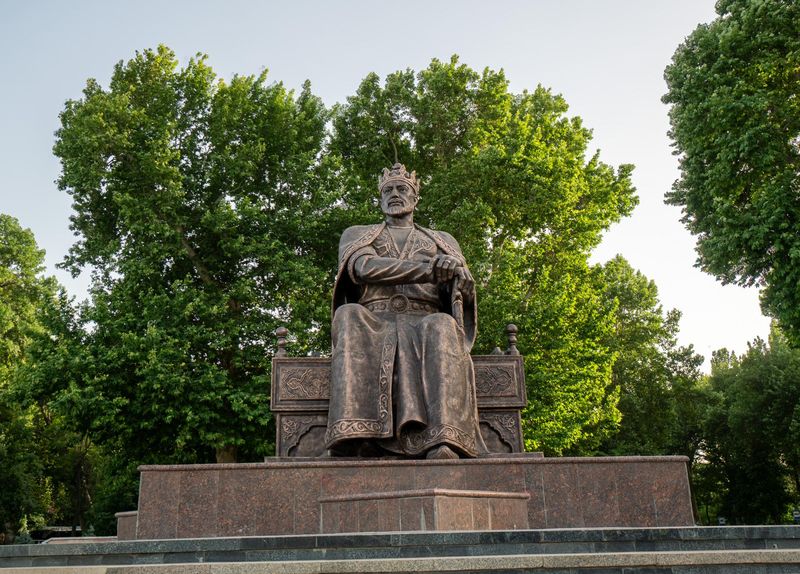
While exploring Samarkand, you will also find a large statue of Amir Timur. It is a popular place for both visitors and locals to stop for photographs.
You don't need a huge amount of time here, but it is another reminder of just how important Timur remains to the story and identity of Samarkand.
Visit the Enormous Bibi-Khanym Mosque
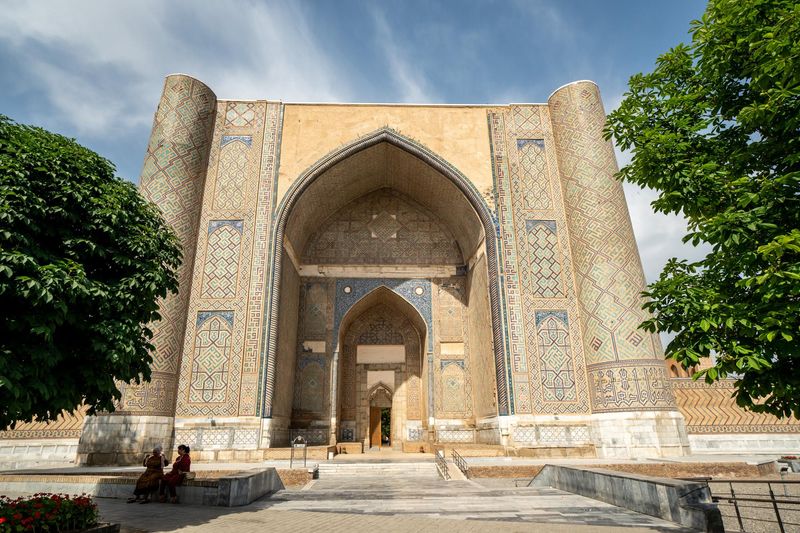
You realise just how big Bibi-Khanym Mosque is before you even walk through the entrance.
Standing in front of it, I found it difficult to fit the whole building into one frame without using a very wide lens. You almost have to look straight upwards to take it all in.
When it was built, Bibi-Khanym was one of the largest mosques in the Islamic world and was designed on a monumental scale.
Over the centuries, earthquakes and conflict damaged much of the original building, and restoration work has since helped reconstruct parts of it.
But one of the most memorable things about Bibi-Khanym is the story connected to its construction.
The Legend of Bibi-Khanym
There are different versions of the story. One says that Amir Timur built the mosque and named it after his wife.
Another legend says Bibi-Khanym ordered it to be built as a surprise while Timur was away.
According to the story, the architect fell in love with her and refused to finish the building unless she agreed to give him a kiss. Eventually, she did.
When Timur returned, he was understandably not very happy about this and ordered the architect to be killed.
Whether you believe the legend or not, it makes the mosque much harder to forget.
The moral of the story?
Don't fall in love with the king's wife.
See the Bibi-Khanym Mausoleum
Just opposite the mosque is the Bibi-Khanym Mausoleum.
It is traditionally associated with Bibi-Khanym and her family, although parts of the site's history and exactly who was buried here have been debated.
Because it is so close to the mosque, it makes sense to visit both at the same time.
Explore Siab Bazaar
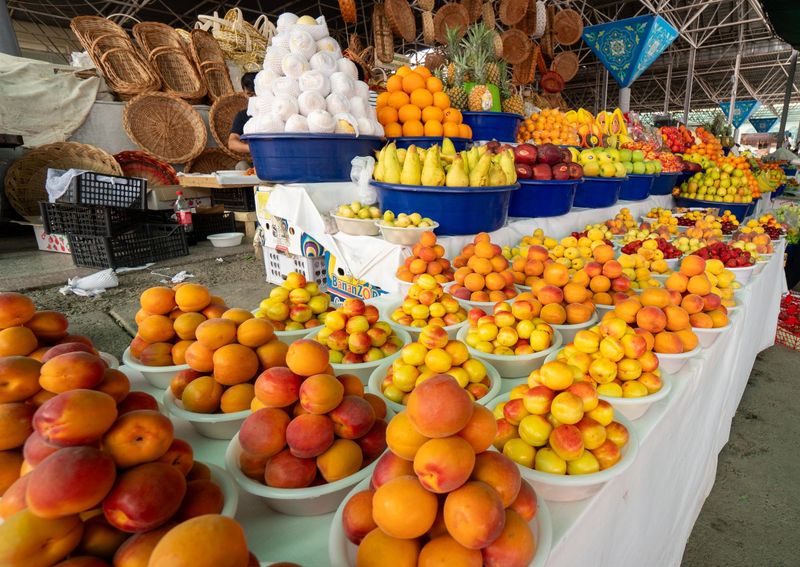
Right next to Bibi-Khanym Mosque is Siab Bazaar, one of the best places in Samarkand to experience the city beyond its monuments.
People have traded in this part of Samarkand for centuries.
During the Silk Road period, merchants passed through the region carrying goods from China, Persia and beyond. Today, the bazaar is still full of life.
You'll find fresh bread, dried fruits, nuts, spices, sweets, tea and mountains of seasonal produce.
One thing I really enjoyed was how many vendors offered us things to taste while we walked around. I tried halva, different nuts and dried fruits.
We also found sheets of dried fruit that immediately reminded me of lavashak, something we eat in Iran.
Speaking Persian in Samarkand
This was also one of the places where my Iranian background made the experience particularly interesting.
Many people in Samarkand speak Tajik, which is closely related to Persian.
Their pronunciation and some of their words are different from the Persian I speak, so I didn't understand everything immediately, but we could still communicate with each other.
It made conversations much easier, especially because not everyone we met spoke English.
For me, markets like Siab are often where you start to understand a place beyond its famous buildings.
Walk Up to Hazrat Khizr Mosque
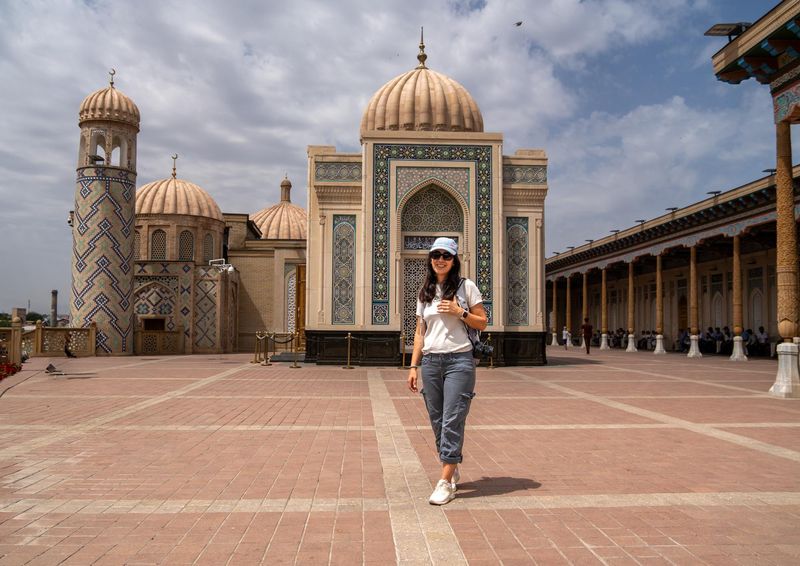
A short walk from Siab Bazaar is Hazrat Khizr Mosque. The site has a long religious history and has been rebuilt several times over the centuries.
It is also close to the resting place of Islam Karimov, the first president of independent Uzbekistan.
But one of the biggest reasons I recommend coming here is the view.
When you stand close to Bibi-Khanym Mosque, it is actually difficult to appreciate its enormous scale because you are simply too close to it.
From higher up around Hazrat Khizr Mosque, you get a much better view across Bibi-Khanym and the surrounding area.
It was one of my favourite viewpoints in Samarkand.
Walk Through Shah-i-Zinda
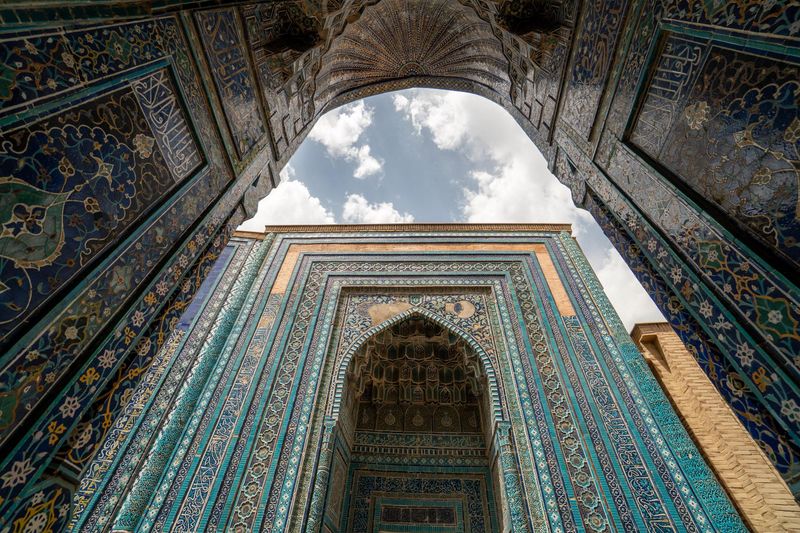
If Registan is Samarkand's most famous attraction, Shah-i-Zinda might be its most beautiful.
The name means Living King, and the site consists of a long avenue lined with mausoleums constructed over different periods.
According to local religious tradition, the site is connected with Kusam ibn Abbas, a cousin of the Prophet Muhammad who is believed to have brought Islam to this region.
One legend says he was attacked and beheaded but continued living, disappearing into a passage leading towards paradise. This is where the name Living King comes from.
Many of the other mausoleums here belong to people connected with the Timurid royal family and important nobles.
But what makes Shah-i-Zinda so visually striking is the decoration.
Almost every doorway, wall and dome seems to have a different pattern of blue, turquoise and deep cobalt tilework.
Walking through it genuinely feels like stepping back in time.
Best Time to Visit Shah-i-Zinda
If possible, come early in the morning or later in the afternoon. It can become crowded, particularly around the narrow stairways and entrances, and visiting outside the hottest part of the day is much more comfortable.
Remember that Shah-i-Zinda is also an important religious site, so dress respectfully.
I always carry a lightweight scarf with me when visiting mosques, mausoleums and other religious places so I can cover up when needed.
Visit Ulugh Beg Observatory
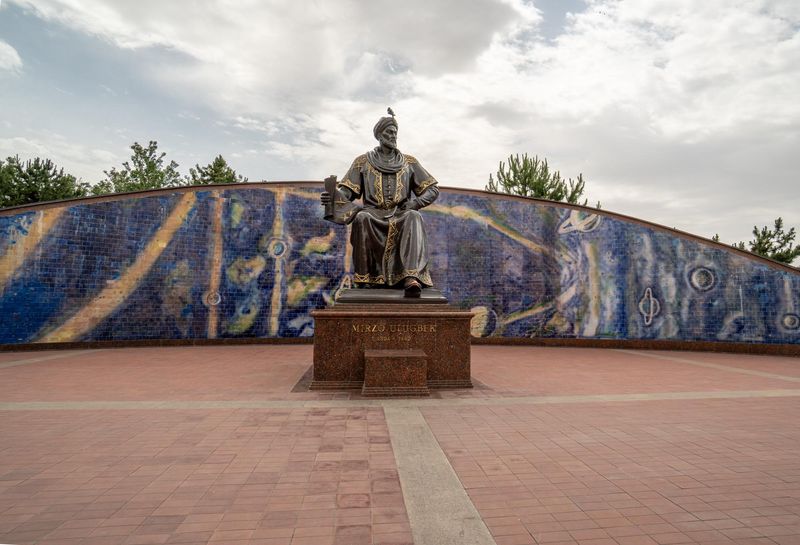
Not everything in Samarkand is about mosques and mausoleums. Ulugh Beg Observatory tells another side of the city's history.
Ulugh Beg was a ruler of Samarkand, but he became much better known for his work as an astronomer and mathematician. He built an observatory here to study the planets and stars.
The main feature you can still see today is part of the enormous astronomical instrument he used to make measurements.
His astronomical work was remarkably advanced for its time, and his tables continued to influence astronomy long after his death.
The observatory is further away from many of Samarkand's main historic attractions, so this was one place where we took a taxi rather than walking.
Experience Modern Samarkand
One thing I think people sometimes miss when planning a trip to Samarkand is that it isn't just a collection of Silk Road monuments. Samarkand is a modern, living city.
We found plenty of parks, tree-lined streets, modern restaurants and cafés.
After spending hours visiting historical sites, sometimes it was nice just to sit down somewhere for a cappuccino and something sweet.
The greenery was also very welcome when we visited because the weather was hot. Walking beneath the trees made exploring much more comfortable.
Unlike some historic cities where almost everything is concentrated inside one old town, Samarkand's attractions are spread through the modern city. I actually liked that.
You aren't only moving from one tourist attraction to another. You also get glimpses of everyday life between them.
We personally felt extremely safe while travelling around Samarkand, including when carrying our cameras and filming equipment.
People were generally relaxed and friendly, and when someone wanted a photograph with us, they usually asked very politely first.
What to Wear in Samarkand
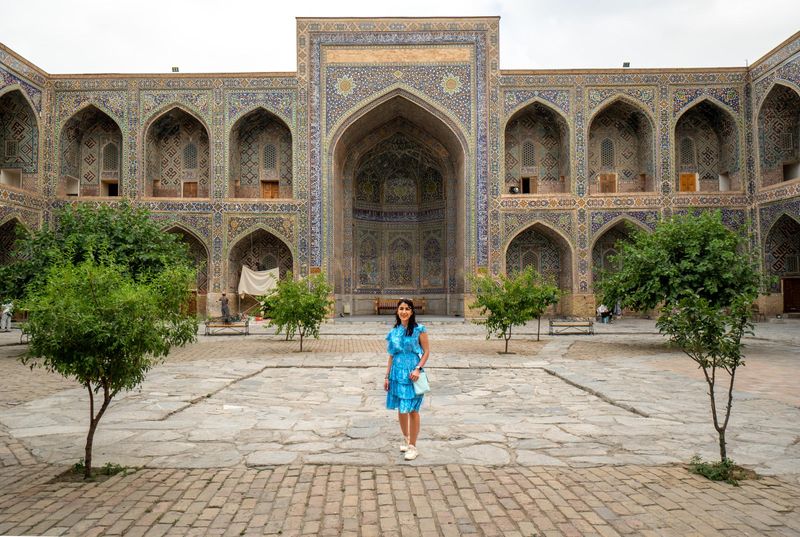
Uzbekistan is a Muslim-majority country, but we found the dress code generally quite relaxed. You don't need to cover your hair while walking around the city.
However, when visiting mosques, mausoleums and active religious sites, dress respectfully.
I always carry a lightweight scarf in my bag so I can cover my hair or shoulders if needed.
I would also keep shoulders and knees covered when visiting places such as Shah-i-Zinda and religious buildings around Registan.
And don't forget the weather. If you are visiting during the warmer months, wear lightweight and breathable clothes, comfortable shoes, sunglasses and a hat.
You will spend a lot of time outside.
Is Samarkand Worth Visiting?
Absolutely, Yes. It is a must-see city.
By the time we reached Samarkand, we had already travelled through Khiva and Bukhara, so we had seen some incredible architecture and historic Silk Road cities. But Samarkand still managed to surprise us.
Khiva feels almost like stepping inside an open-air museum.
Bukhara has a beautiful historic centre where many attractions are concentrated together. Samarkand feels different.
The monuments are grander and much more spread out, and between them you experience a modern city filled with parks, cafés, busy roads and local neighbourhoods.
For us, that combination made Samarkand feel particularly alive.
Samarkand FAQ
What is Samarkand famous for?
Samarkand is best known for its Silk Road history, Timurid architecture and landmarks such as Registan Square, Shah-i-Zinda, Gur-e-Amir and Bibi-Khanym Mosque.
Is Samarkand walkable?
Partly. You can easily walk between some nearby attractions, but the main sights are spread around the city.
We found a combination of walking and Yandex Go taxis the easiest option.
Is Samarkand safe?
We personally felt extremely safe in Samarkand and were comfortable walking around with our cameras and filming equipment.
As anywhere, normal travel precautions still apply.
Is Registan better during the day or at night?
Both are worth seeing. During daylight, you can appreciate the details and colours of the buildings much better.
At night, Registan is illuminated and has a completely different atmosphere.
If possible, do both.