

Uzbekistan is beautiful, safe, relatively affordable and much easier to travel around independently than many people seem to think.
But there were also a few things we wish we had known before our trip. Google Translate wasn’t always very helpful, train tickets sold out much faster than we expected, and some journeys took longer than they appeared on the map.
We travelled around Uzbekistan for two weeks, visiting Tashkent, Khiva, Bukhara and Samarkand, but we also went beyond the main Silk Road route. We crossed the desert, visited ancient fortresses, stayed in a yurt, swam in a lake and saw a mountainous side of Uzbekistan that many visitors miss.
The trip also had a personal connection for me. Growing up in Iran, I already knew the names Bukhara and Samarkand from Persian books and poems. They were places I had heard about since childhood, so it was nice finally to see them for myself. I already made a series of videos on YouTube, so you can watch it.
In this article, I am going to share everything you need to know before visiting Uzbekistan and will share the mistakes we made, so you can avoid them.
This post contains affiliate links, and if you click one, I may receive a small commission at no extra cost to you.
Can you travel independently in Uzbekistan?
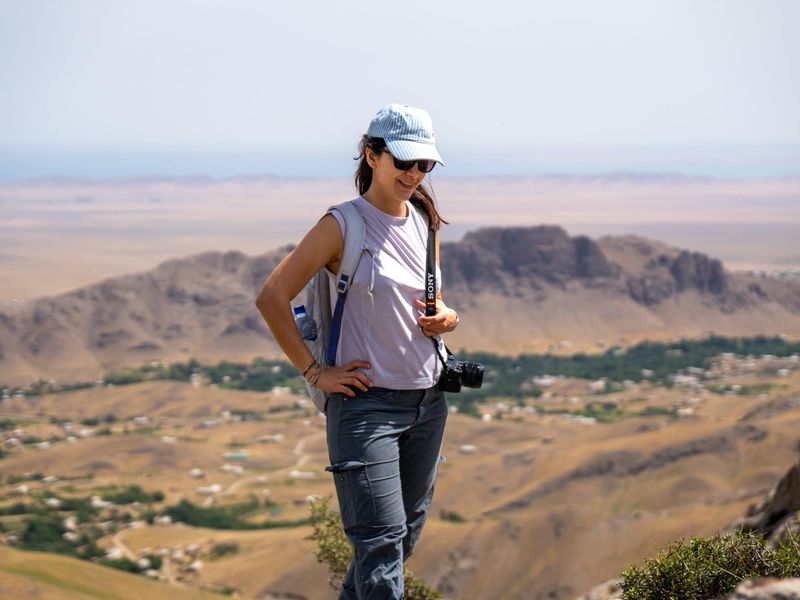
One of the biggest misconceptions about Uzbekistan is that you need to join an organised tour. You really don’t. You can easily travel independently in the country.
We travelled independently for two weeks, booking our own hotels and transport and deciding how long we wanted to spend in each place.
Uzbekistan’s main tourist cities are well connected by trains, domestic flights and private drivers, so organising the basic route yourself is quite straightforward.
That doesn’t mean you should avoid tours completely. Uzbekistan has an enormous amount of history, and having a local guide at places such as Samarkand or Bukhara can help you understand what you are actually looking at rather than simply admiring another beautiful building.
I like mixing the two: travel independently, then book a local guide, walking tour or day trip when it adds something to the experience.
Tours you should take in Uzbekistan:
Full-Day Mountain Tour: Explore Amirsoy, Chimgan & Charvak
Is Uzbekistan Safe?
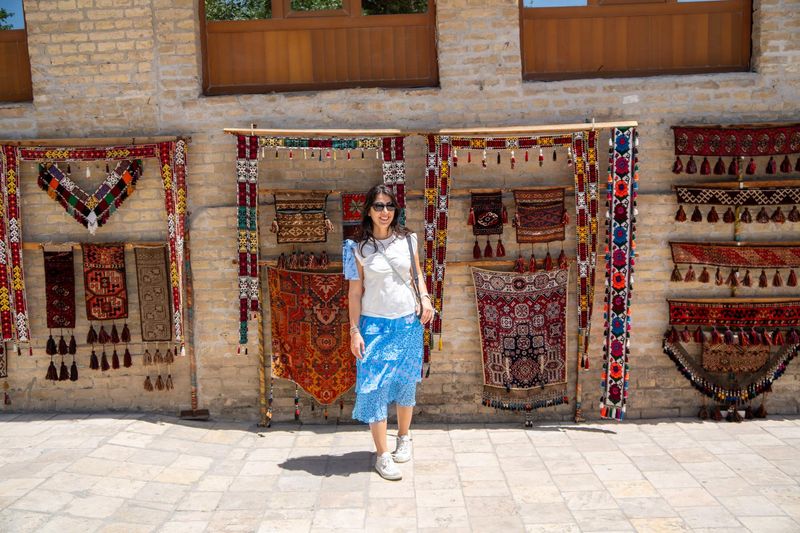
Uzbekistan felt safer than many Western countries we have travelled to. You should know that Uzbekistan has a very low crime rate.
We felt completely comfortable throughout the trip, including in the larger cities. When we were filming, we occasionally put camera equipment and bags down nearby, and nobody touched them.
We also didn’t encounter the aggressive selling you sometimes experience in very touristy destinations. Even around the major attractions and bazaars, people weren’t constantly trying to push us into shops or sell us something.
We didn’t experience any scams or situations that made us uncomfortable. That doesn’t mean scams or petty crime never happen, so normal travel precautions still apply, but the general atmosphere felt relaxed and peaceful.
How to Travel Around Uzbekistan
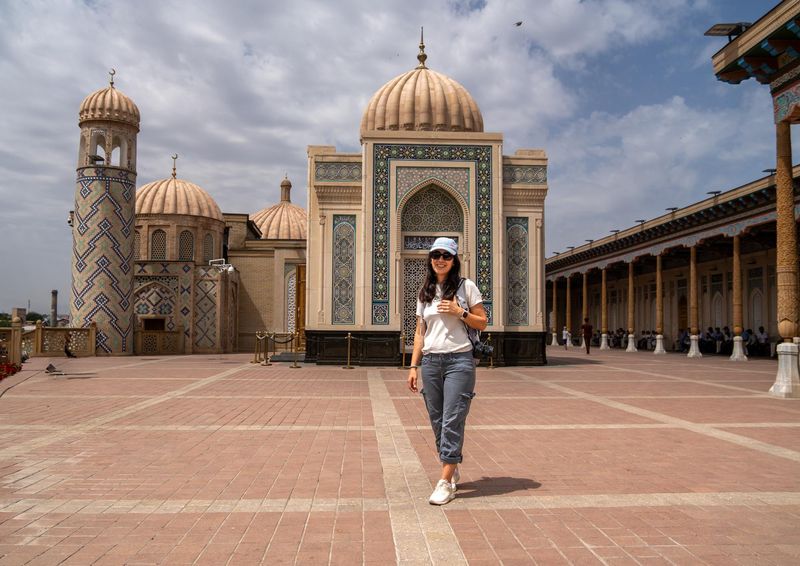
There are domestic flights, trains and private drivers, but for the main Silk Road route, the train is usually the most convenient option.
The high-speed trains connect Tashkent, Samarkand and Bukhara, and they are comfortable and much quicker than travelling by road. But train tickets sell out very quickly, so make sure to book your e-ticket in advance.
We tried to find a last-minute train from Bukhara to Samarkand, but there was nothing available at a decent time. We still managed to travel by taxi, so getting stranded wasn’t the problem, but the train would have been much more convenient.
Khiva is further away. There are trains connecting it with other parts of Uzbekistan, including services from Tashkent, but the journey is considerably longer. We flew to Urgench and continued to Khiva from there.
Turn the Khiva to Bukhara Transfer Into a Day Trip
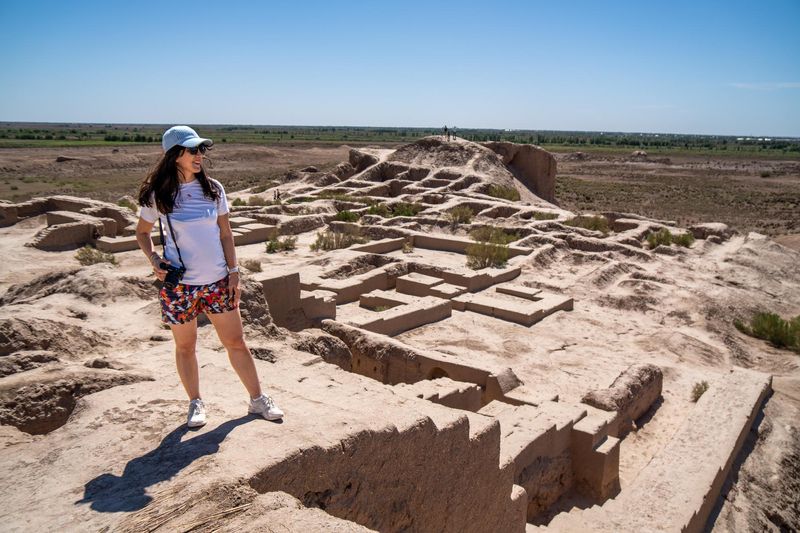
If you are travelling between Khiva and Bukhara, you don’t necessarily have to treat it as a boring transfer day.
We hired a driver and stopped at ancient Khorezm desert fortresses along the way. Tours currently operate this route via fortresses including Ayaz Kala, Toprak Kala and Kyzyl Kala.
It takes longer than going directly, but I would much rather spend the day exploring than simply sit in a car for hours.
Download Yandex Go App
Once you arrive in a city, taxis are inexpensive and very useful, especially in Tashkent and Samarkand where attractions can be spread out.
The problem with simply stopping a taxi on the street is that you may not know what the journey should cost, and then you have to negotiate.
To avoid the hassle, download Yandex Go. Plus, most locals use this app to get a taxi.
Yandex Go is basically the Uber of Uzbekistan. You enter your destination and see the fare before requesting the car, which is also useful when there is a language barrier. You can pay in cash, so you don’t necessarily need to pay on the app.
Get a Local SIM or eSIM
Hotels and some restaurants offer Wi-Fi, but let’s be honest: you need internet while you are out exploring.
You will use it for Yandex Go, maps, train information, contacting accommodation and trying to translate things.
You can buy a local SIM after arriving, but you will need your passport to register it. The easier option is an eSIM, particularly if you want internet as soon as you land.
We tested both. I used a local SIM, and Bruno used Airalo, and we both had a good connection during the trip. An eSIM is more convenient, while a local SIM can work out cheaper if you need a lot of data.
Is Uzbekistan expensive for tourists?
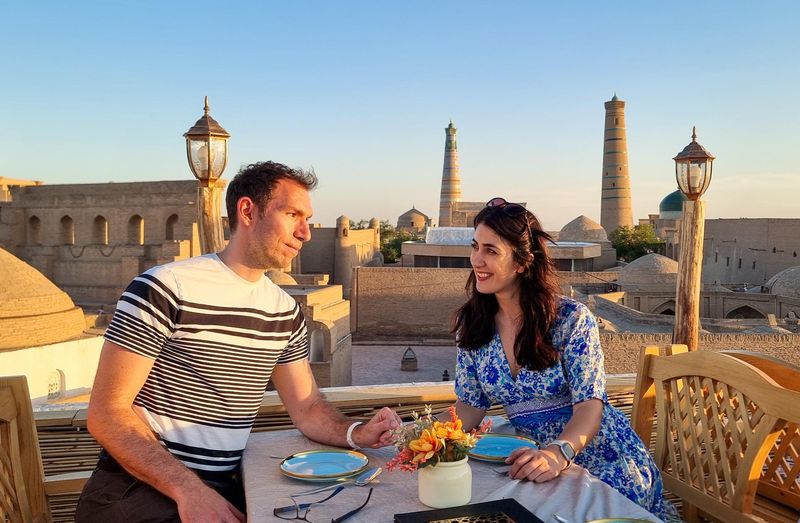
Uzbekistan is still a very affordable country to travel around, particularly compared with much of Europe.
Local meals, taxis and accommodation can be reasonably priced, and even hiring a driver between cities can sometimes be affordable.
The currency is the Uzbek som, and the number of zeros takes a little getting used to.
Cards are accepted increasingly widely in hotels and larger restaurants, but I wouldn’t travel without cash. You will need it for smaller shops, bazaars, local restaurants, taxis and sometimes entrance fees. Keep smaller notes too. They make paying for small purchases much easier.
English Isn’t Widely Spoken
The official language is Uzbek, while Russian is also widely used.
In Bukhara and Samarkand, you may also hear Tajik, which is very close to Persian. Because I speak Iranian Persian, I could understand quite a lot of it.
English, however, isn’t spoken everywhere, and some restaurants don’t have English menus.
Normally when I travel, I rely heavily on Google Translate, especially its camera function.In Uzbekistan, that didn’t always work. Sometimes Google didn’t recognise the Uzbek words properly, and some translations simply weren’t useful. Translating into Russian sometimes worked better.
Download Uzbek and Russian offline, save hotel addresses on your phone and keep screenshots of tickets and bookings.
Sometimes showing someone a photograph of where you are trying to go is easier than translating the name.
Best Times to Visit Uzbekistan
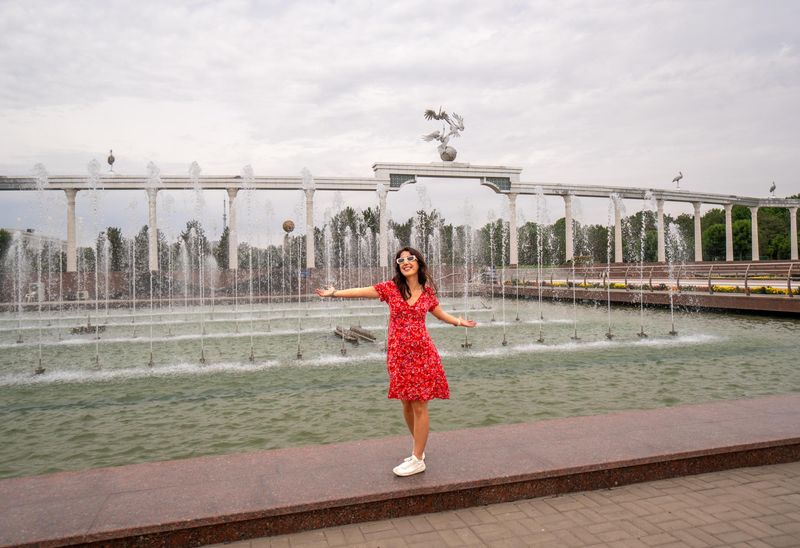
For most travellers, spring and autumn are the best times to visit Uzbekistan.
We visited in May, and even then, some days felt very hot, especially when we were walking around Khiva and Bukhara in the middle of the day.
So, even if you visit in spring, I would still recommend starting early, taking a break during the hottest part of the afternoon and going out again later.
Summer can get extremely hot, especially in Khiva, Bukhara and the desert areas, where you spend a lot of time outside and there isn’t always much shade.
Autumn is another good time to visit because the temperatures are usually more comfortable for sightseeing.
Winter is much quieter and can be cheaper, but it can also get very cold, especially at night, and you may even see snow in some parts of the country.
For a first trip, I would still choose spring or autumn. Just keep in mind that these are also popular times to visit, so book your trains and accommodation early.
What to Wear in Uzbekistan
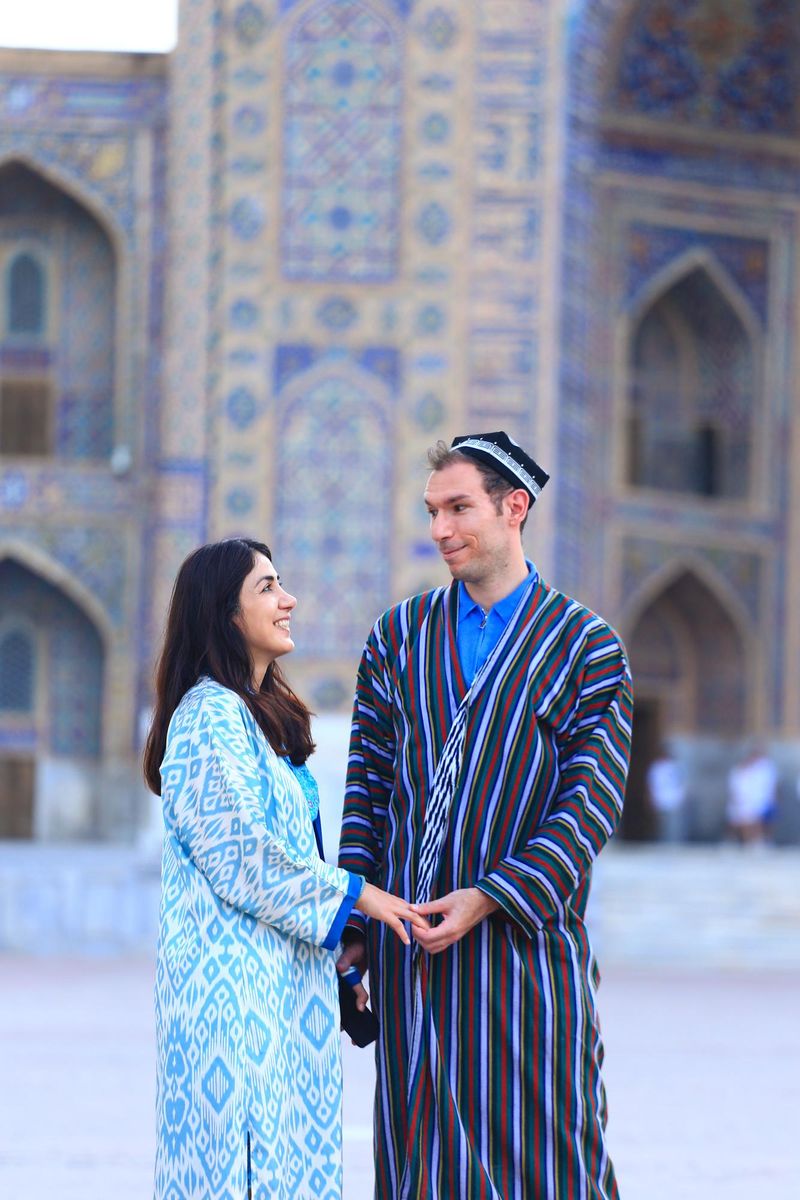
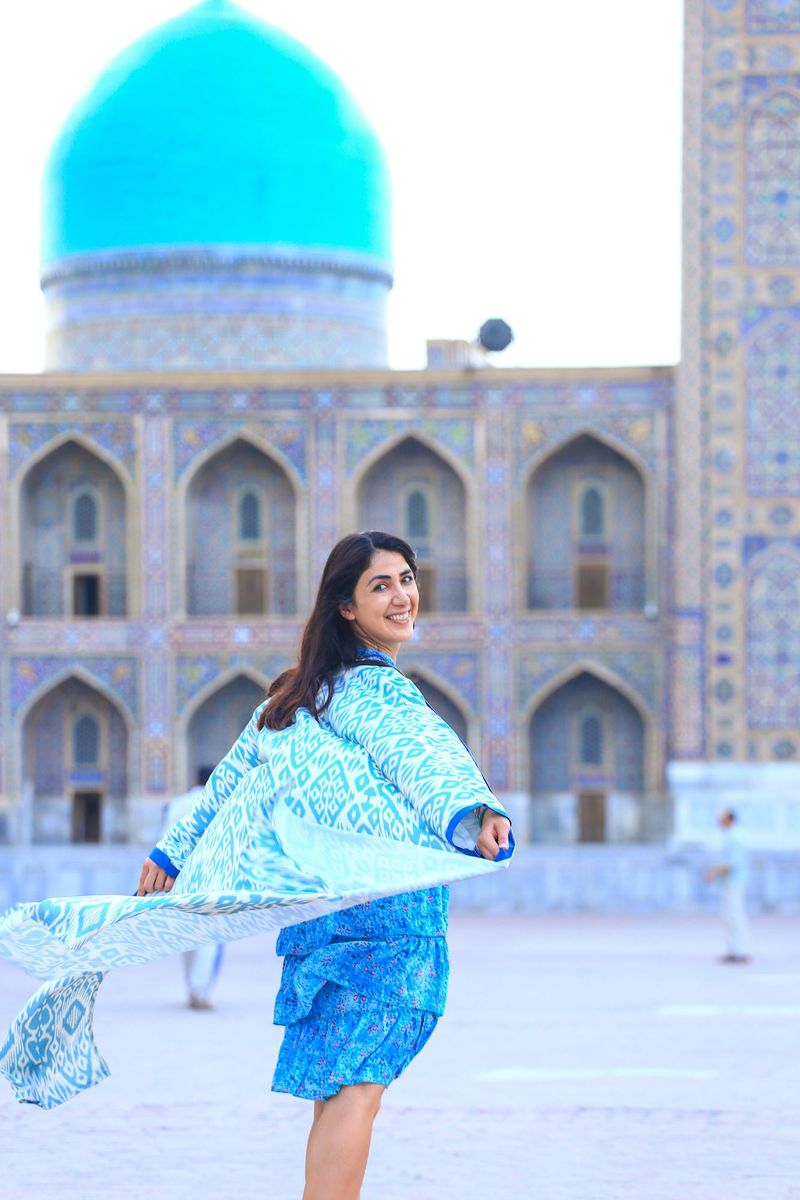
Uzbekistan is a Muslim-majority country, but it is quite relaxed when it comes to clothing.
Women don’t need to cover their hair while walking around, and in the cities you will see a mixture of traditional and Western clothing.
You should still dress respectfully when visiting mosques, mausoleums and other religious places. I always carry a lightweight scarf with me in case I need to cover my hair.
You may also need to remove your shoes when entering some religious buildings.
And remember the heat. Wear lightweight, loose and breathable clothes, especially during summer. A hat, sunglasses and comfortable walking shoes are also useful because you will spend a lot of time outside.
Stay in a Traditional hotel
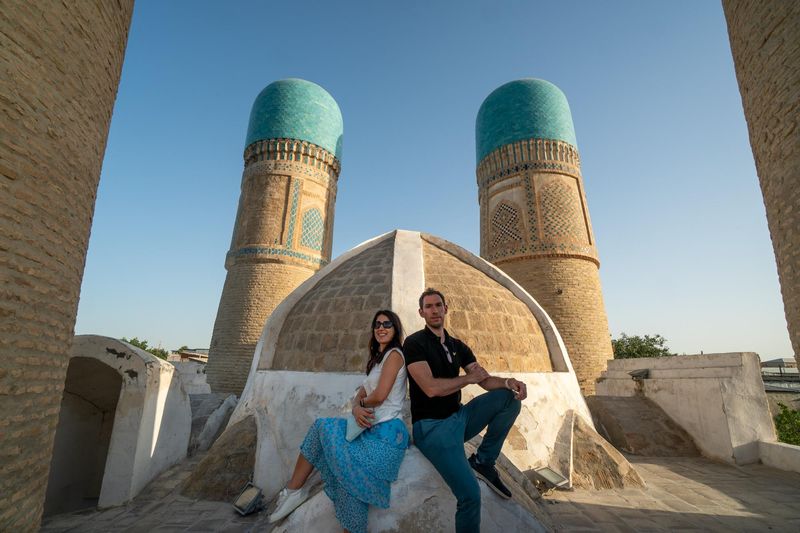
One thing I would do differently from booking a generic modern hotel is to look for accommodation that is part of the destination itself.
This is particularly easy in Khiva and Bukhara. You can find guesthouses and boutique hotels inside historic buildings, including former madrasas, merchant houses and caravanserai-style properties.
Staying inside Khiva’s old city or close to the centre of Bukhara also means you can walk to most attractions and go out early in the morning or later in the evening when the streets are much quieter.
It gives you a completely different experience from staying in a modern hotel outside the historic centre.
Where to stay in Khiva:
Orient Star Khiva Hotel- Madrasah Muhammad Aminkhan
Where to stay in Bukhara:
Turkman Madrasah XIX Century Hotel
Where to stay in Samarkand:
L'Argamak Boutique Hotel Historic Center
Food in Uzbekistan
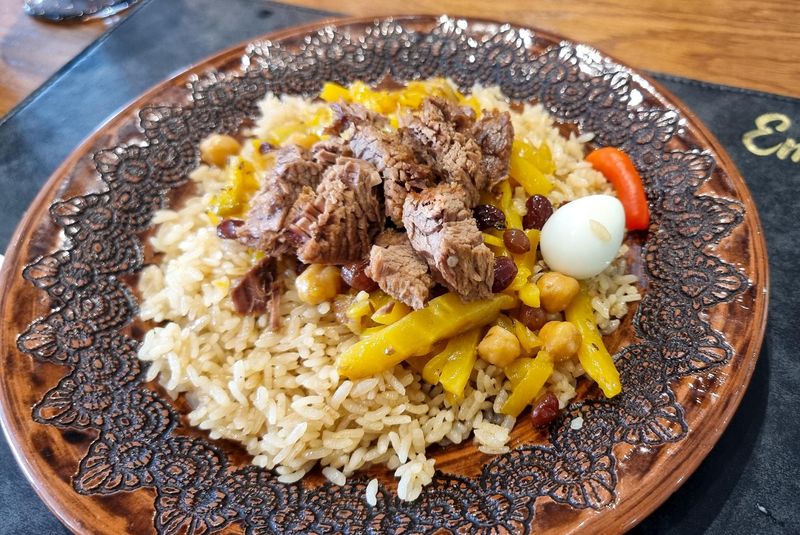
Uzbek food is quite meat-heavy. We had some really good meals, but we also had some food that honestly wasn’t very delicious.
The dish everyone tells you to try is plov, usually made with rice, meat and carrots.
And apparently, there is a rivalry between Bukhara and Samarkand. People in Bukhara believe they have the best plov. People in Samarkand believe theirs is better. So obviously, you need to try both and decide for yourself.
For plov in Samarkand, Samarqand Osh Markazi N1 is one of the best-known choices and continues to receive strong reviews. In Bukhara, you can try a local plov centre such as Ismail Samani Plov Centre or Magistral Plov Centre, both known for Bukhara-style plov.
You will also find samsa, manti, kebabs, lagman noodles and plenty of bread.
In Tashkent and Samarkand, there is a much wider choice of international restaurants too, and after eating traditional food for several days, I really enjoyed trying those as well.
Take a Cooking Class in Uzbekistan

If you want to understand Uzbek food rather than simply eat it, taking a cooking class is a great experience.
There are cooking experiences in Samarkand where you visit a local family, learn how plov is prepared and eat the meal together afterwards. Some also include visiting a village outside the city, which gives you another chance to see daily life away from the tourist attractions.
How Long Do You Need in Uzbekistan
You can visit Tashkent, Samarkand, Bukhara and Khiva in a week, but you will spend a lot of the trip moving. I would recommend 10 days to two weeks.
That gives you enough time to move around slowly, experience each city rather than rushing through it, and add a few places away from the traditional Silk Road route.
With two weeks, you can visit the desert fortresses, stay in a yurt and see the mountainous side of Uzbekistan that most tourists miss.
Our two weeks felt like a good amount of time, although there were still places we could have added.
Spend a Night in a Yurt and Visit Lake Aydarkul
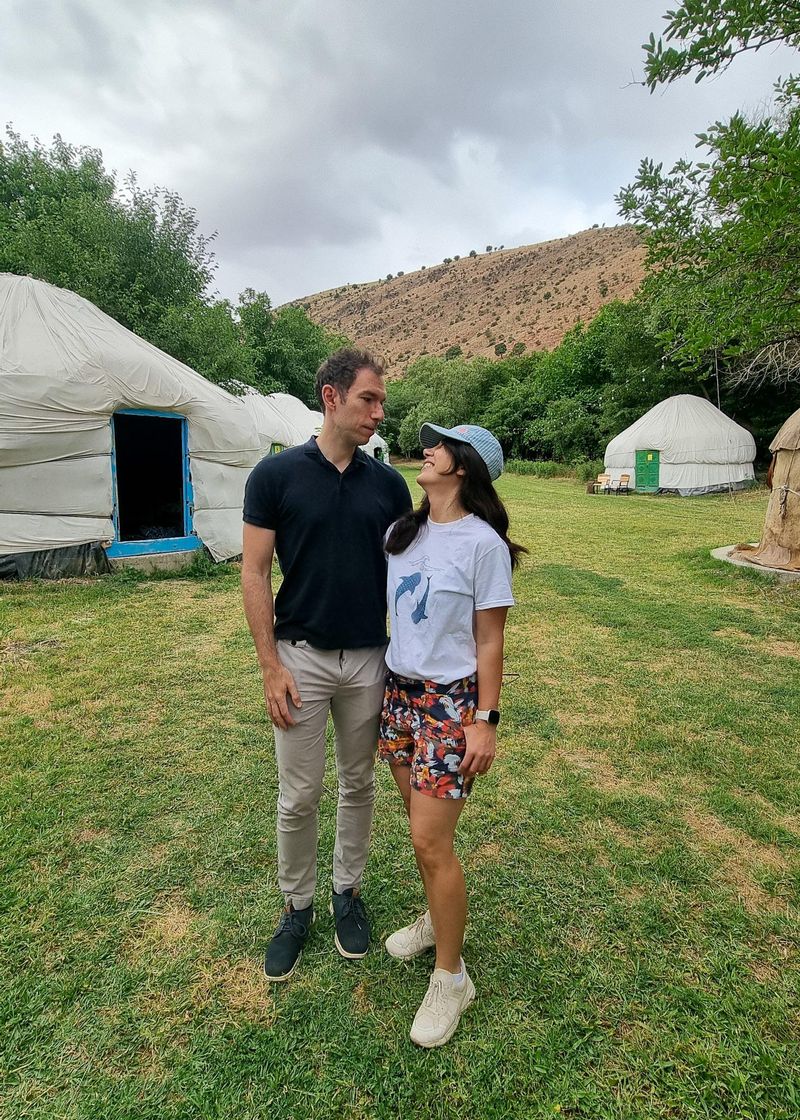
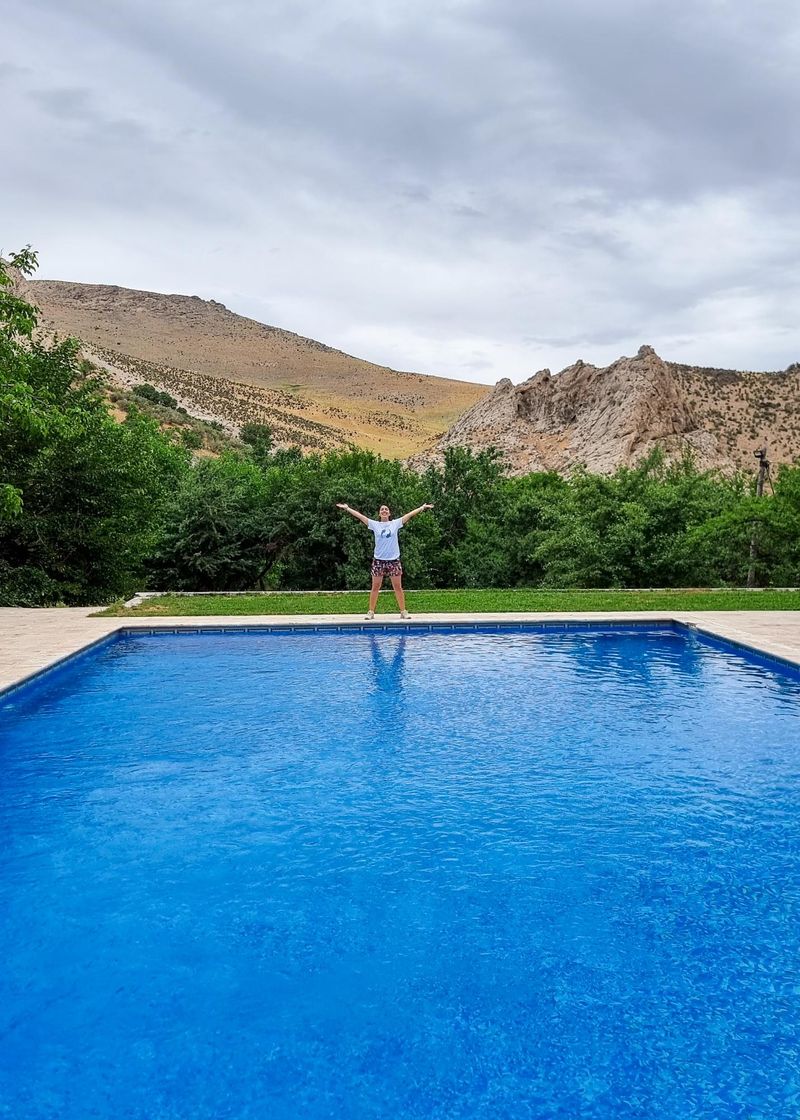
If you have enough time, I highly recommend leaving the cities for a few days.
We stayed in a yurt, visited Lake Aydarkul, went swimming and then continued towards the mountainous part of Uzbekistan. It was completely different from Khiva, Bukhara and Samarkand.
There are three-day trips from Bukhara or Samarkand that combine Aydarkul Lake, a night in a yurt in the Kyzylkum Desert and the Nuratau Mountains. Some can start in one city and finish in the other, which makes them easy to include in a wider Uzbekistan itinerary.
Uzbekistan Is Great for Photography, but Leave Your Drone at Home
Uzbekistan is a very photogenic country. The blue-tiled architecture, markets, traditional clothes and old streets are all great for photography.
It is still polite to ask before taking a close photograph of someone, although most people we met didn’t mind. Some even wanted to be in our photos.
But leave your drone at home. You cannot simply arrive in Uzbekistan with a drone and start flying it. Foreign visitors need permission for the temporary import and use of UAVs.
Unless you have organised the necessary permissions before travelling, it isn’t worth the hassle. Leave it at home and take your camera instead.
Don’t Only Visit the Silk Road Cities
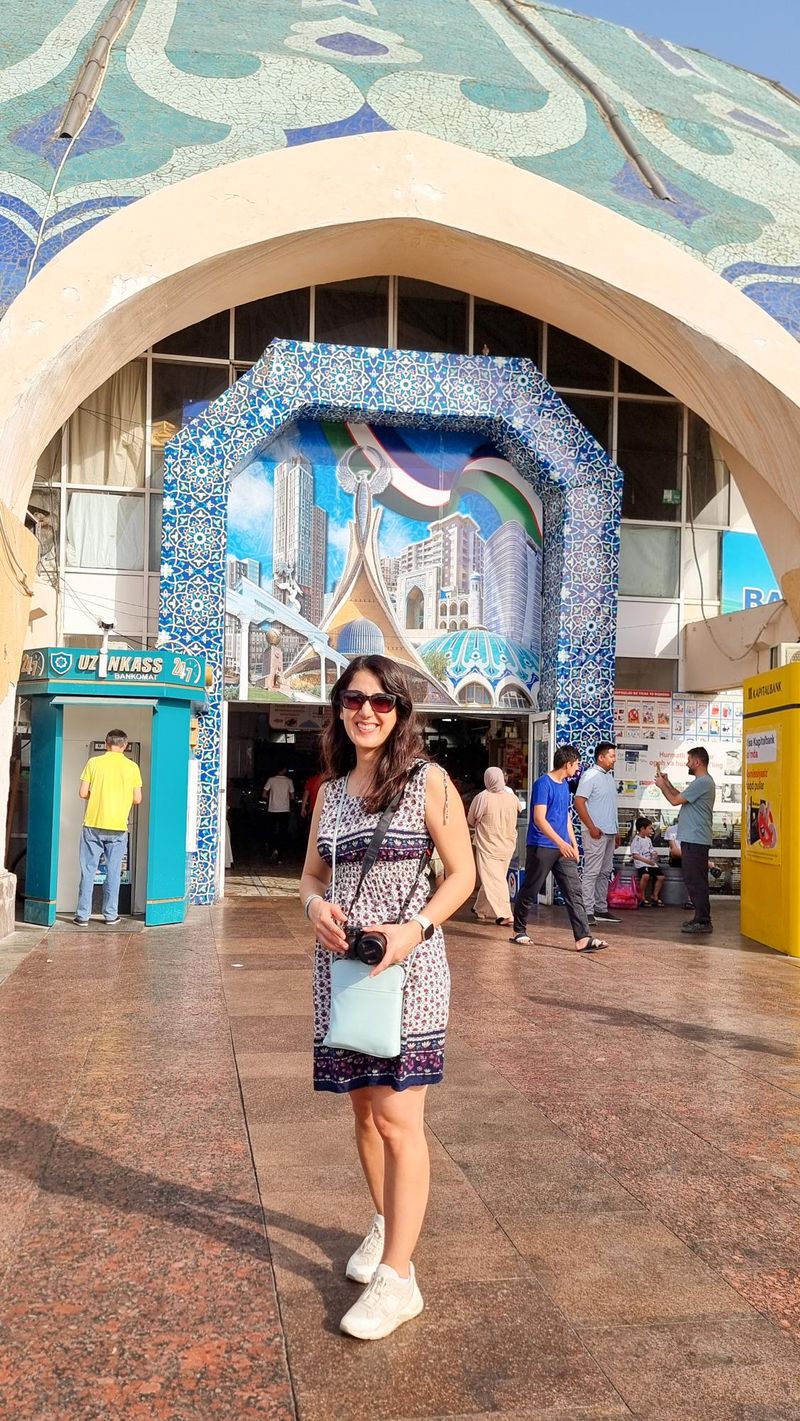

Last but not least, don’t stick only to Samarkand, Bukhara and Khiva. And definitely don’t skip Tashkent.
Tashkent is completely different from the Silk Road cities, and that is exactly why I think you should visit it.
It is one of the best places to see modern Uzbekistan and get a better idea of daily life. You can explore Chorsu Bazaar, ride through some of the beautiful metro stations, visit museums and parks and find a much wider range of cafés and restaurants.
I have already made a complete Tashkent travel guide, so have a look at that when you are planning your itinerary.
But Uzbekistan is also much more than its cities. There are deserts, lakes, villages and mountains. Some of the experiences I remember most from our trip happened when we left the famous Silk Road route and saw a completely different side of the country.
Is Uzbekistan Worth Visiting?
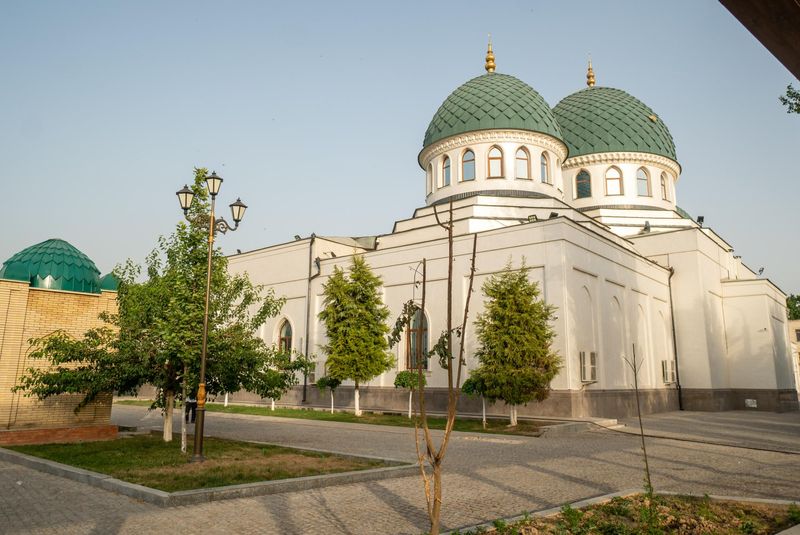
The short answer is absolutely yes. Uzbekistan has incredible architecture and Silk Road history, but what surprised me was how much variety there was once we travelled beyond the famous cities.
You can travel independently; it is relatively affordable, getting around is easier than you might expect, and people are welcoming.
Just remember to book your trains early, download Yandex Go, get internet before you start exploring and give yourself enough time to see more than Samarkand and Bukhara.
We travelled for two weeks, and I think 10 days to two weeks is the ideal amount of time for a first visit.