

Most people visit Italy for places like Rome, Florence, Venice or the Amalfi coast.
And while those places are beautiful, some of my favourite travel experiences in Italy have happened far away from the crowds.
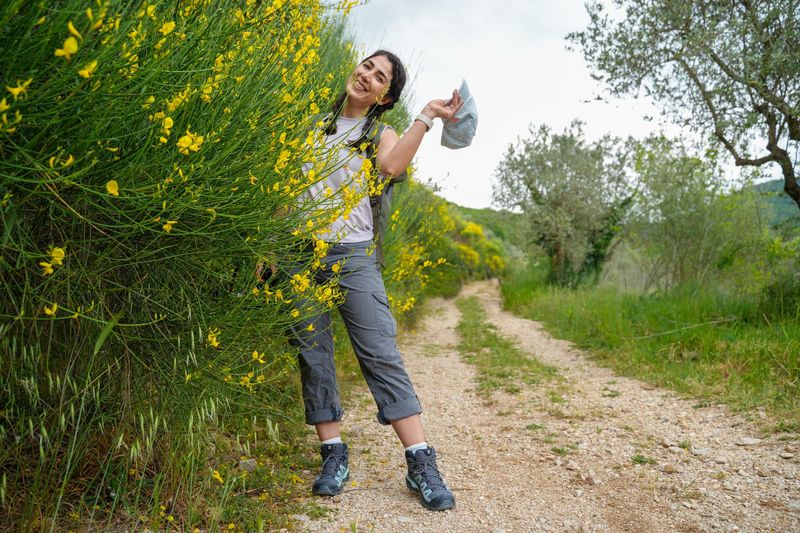
Over the years, I have always tried to go beyond the famous Italian cities and explore more hidden gems, beautiful villages, and quieter corners of the country.
Recently, I had the chance to experience a completely different side of Italy by walking part of the Via di Francesco in Umbria, a historic pilgrimage route inspired by Saint Francis of Assisi.
The Via di Francesco is one of Italy’s lesser-known long-distance walking routes, stretching through some of the most beautiful landscapes in central Italy. Inspired by the journey of Saint Francis, the route connects medieval towns, forests, monasteries, and countryside paths, offering a completely different way to experience the country.
And, it felt like the perfect example of slow travel and a more sustainable way to experience a country.
Instead of rushing from one city to another, you move at a walking pace. You notice the changing landscapes, the small villages, the conversations with locals, and the little details you would probably miss otherwise.
This post contains affiliate links, and if you click one, I may receive a small commission at no extra cost to you.
What Is the Via di Francesco?
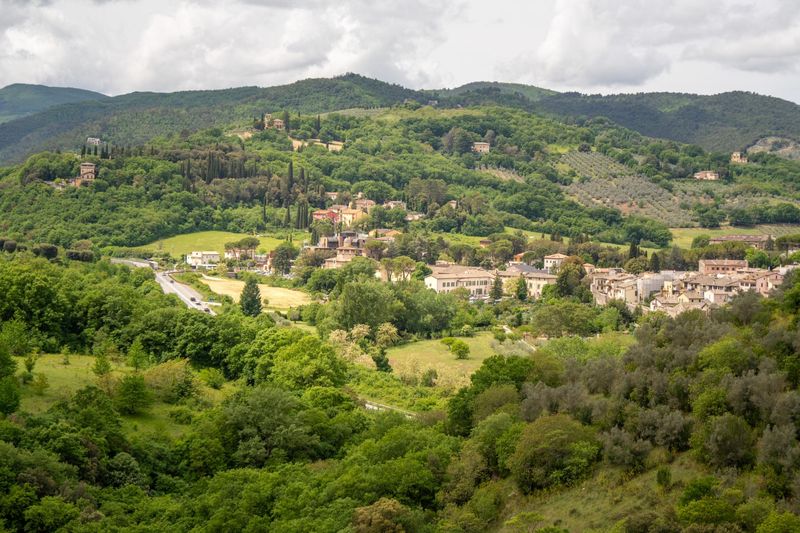
The Via di Francesco is a 513km historic pilgrimage and walking route in central Italy inspired by the life and journey of Saint Francis of Assisi.
Saint Francis was born in Assisi in the late 12th century and later became one of Italy’s most important religious and historical figures. He gave up a wealthy lifestyle to live simply, travelling mostly on foot and connecting with nature and people.
Over time, routes associated with his journey became pilgrimage paths that people still follow today.
The Via di Francesco passes through some of the most beautiful parts of Umbria and Tuscany, connecting medieval towns, forests, monasteries, countryside landscapes, and spiritual sites.
Some travellers walk the entire route over several weeks. Others, like us, walk in smaller sections.
Why the Via di Francesco is Perfect for Slow Travel
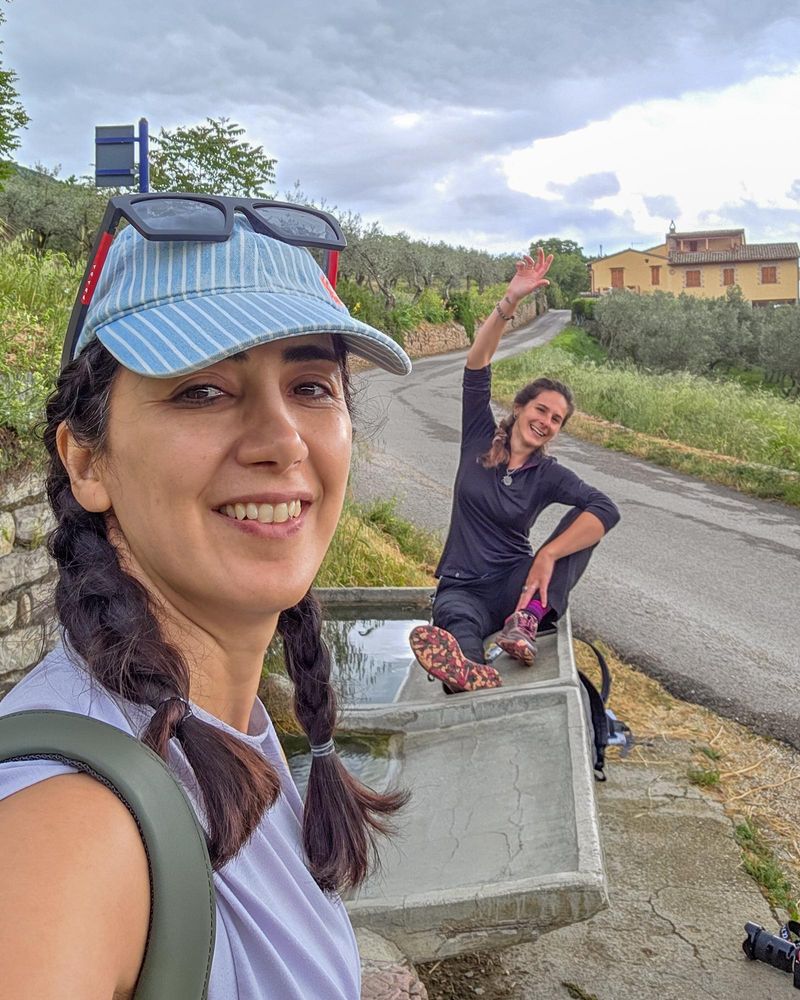
One of the things I love most about travel is discovering places that feel real. Not just famous landmarks, but places where you slow down enough to actually notice what is around you.
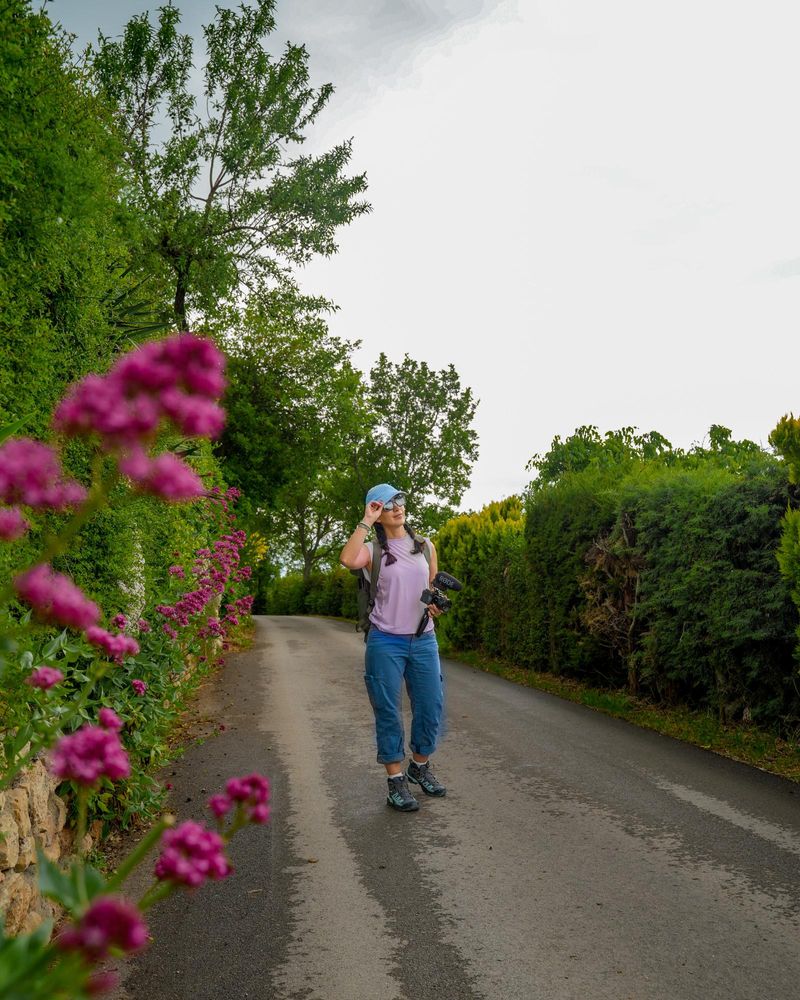
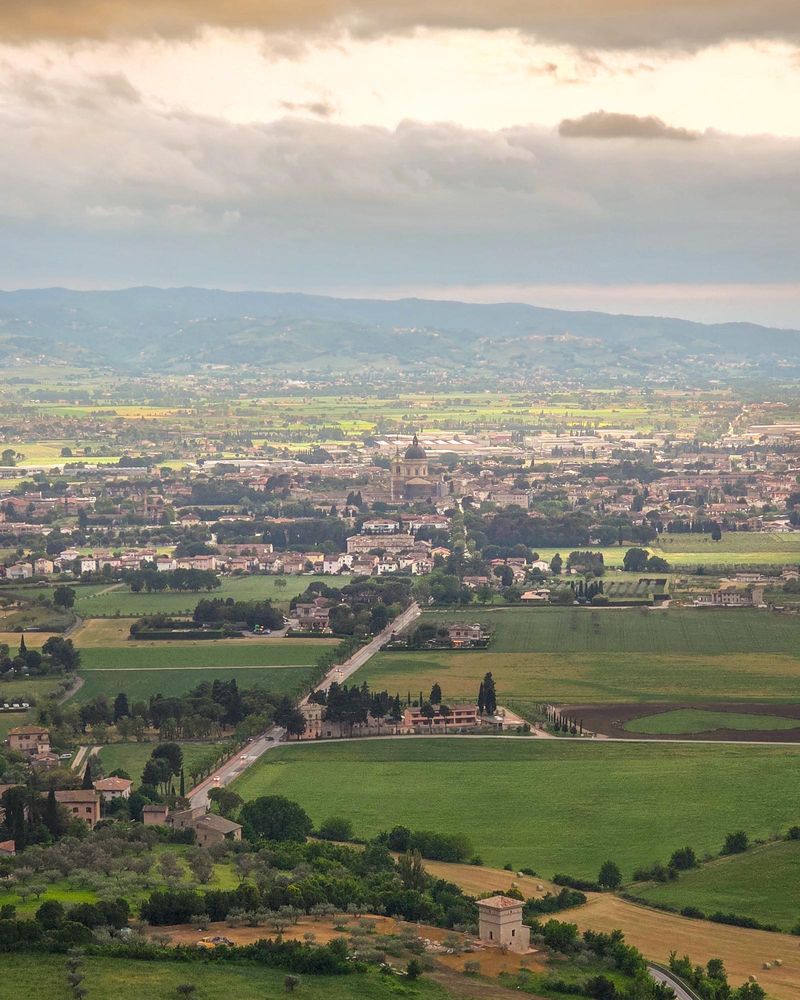
Walking part of the Via di Francesco gave me exactly that. Instead of arriving somewhere by car or train, you experience the transition between places. You see the landscapes change slowly. You walk through olive groves, hear birds in the distance, and pass tiny villages that many tourists never visit.
It felt calm, peaceful, and surprisingly refreshing.
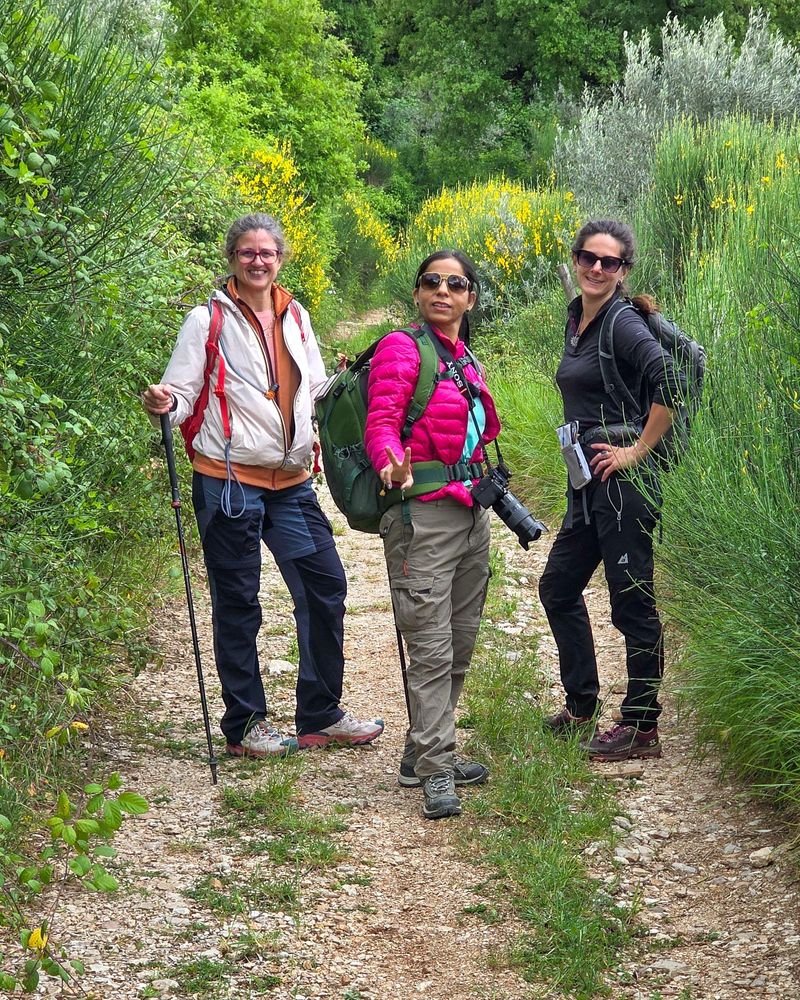
Another thing that made this 3-day trip unexpectedly inspiring was the group itself. We were all women, mostly over 40, walking together through Umbria. And, moments like this remind me exactly why I started the Adventure for All Ages.
Some of the most inspiring people I have met while travelling have been people in their forties, fifties, sixties, and beyond; still curious, still active, and still choosing adventure.
Foligno: Gateway to the Via di Francesco
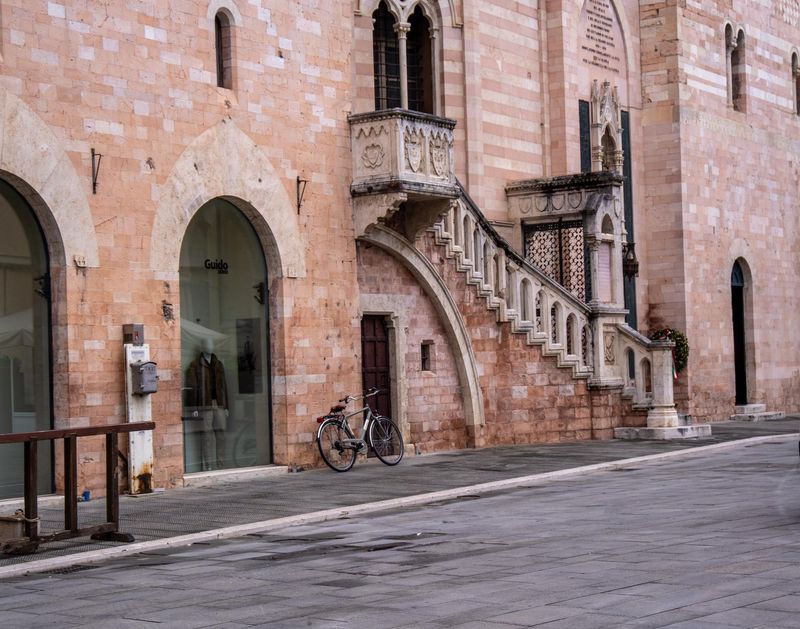
Our journey started in Foligno, one of Umbria’s historic towns. With roots going back more than 2,000 years, Foligno has long been an important stop for travellers and pilgrims crossing central Italy.
Unlike many Umbrian towns built on hilltops, Foligno sits on a plain and is often called the “centre of Italy.”
And despite feeling far from the crowds, it is surprisingly easy to reach, only around two hours by train from Rome or Florence.
Assisi: More Than a Religious Destination
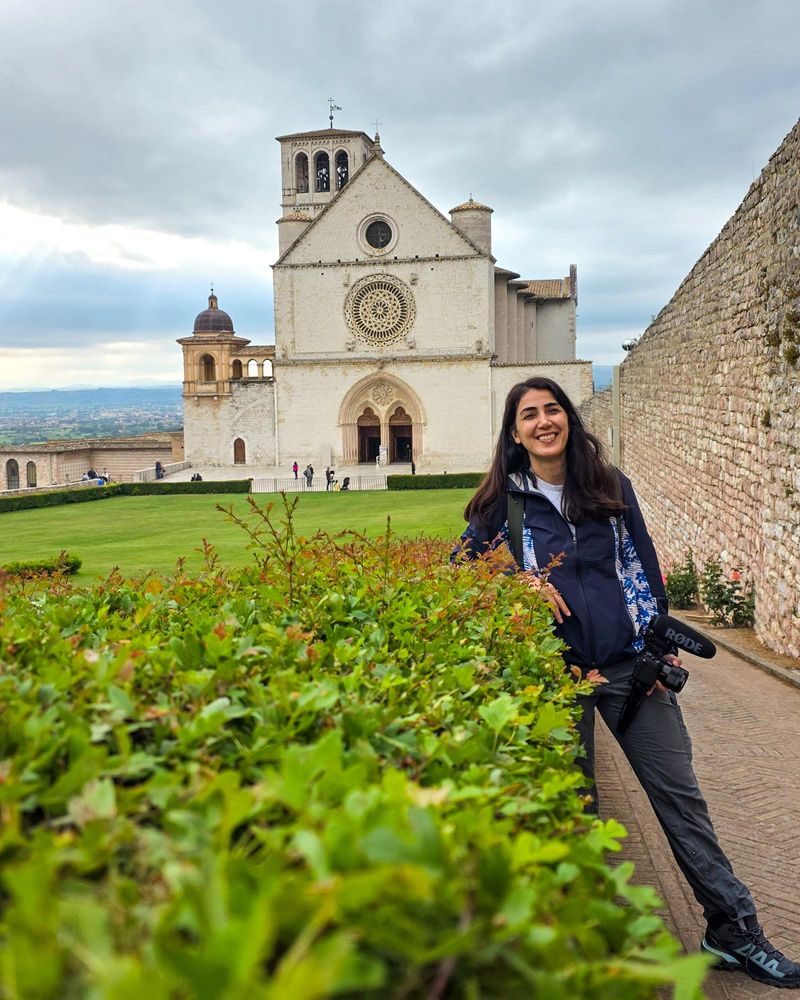
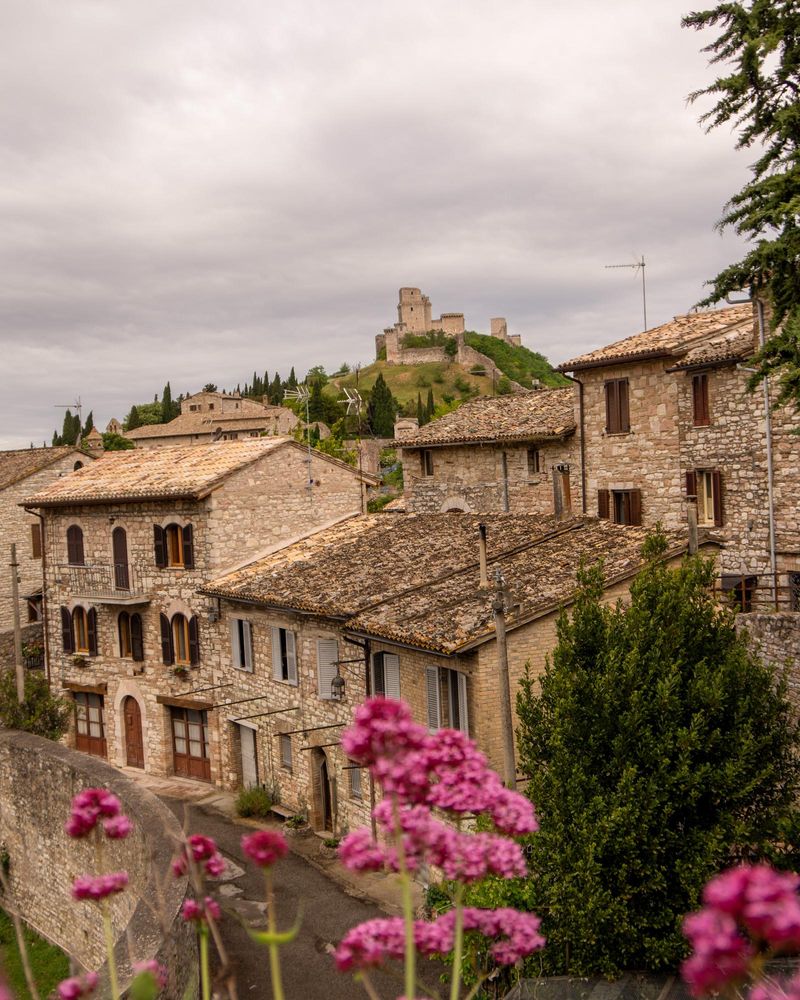
One of the most important stops along the Via di Francesco is Assisi.
Assisi is a UNESCO World Heritage town and one of the most spiritually significant places in Europe. It is the birthplace of Saint Francis and an important stop for pilgrims walking the route. But beyond all of that, Assisi is simply beautiful.
With its medieval streets, stone buildings, flower-covered balconies, and hilltop views, it feels like stepping back in time.
One of the highlights is the Basilica of Saint Francis of Assisi, one of the most impressive and important places along the route. Built shortly after the death of Saint Francis, the basilica attracts pilgrims and visitors from around the world. Inside, you can also visit the tomb of Saint Francis himself.
What surprised me most about Assisi was the atmosphere. Despite being a well-known destination, there were moments when the town felt incredibly peaceful, especially in the early morning and evening.
Eremo delle Carceri: A Quiet Escape Above Assisi
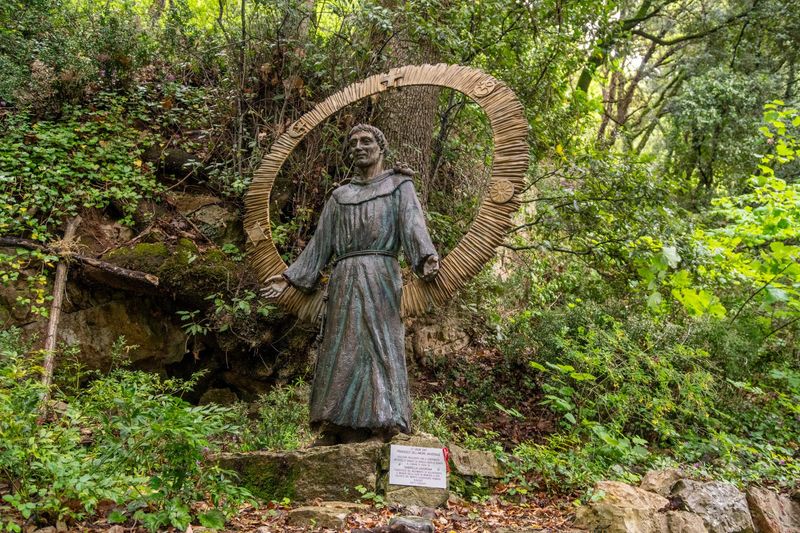
We also visited Eremo delle Carceri, another important stops along the Via di Francesco and a peaceful hermitage hidden in the forest above Assisi, where Saint Francis and his followers would retreat for prayer and meditation in the early 13th century.
Despite its name, which roughly translates to “Hermitage of the Prisons”, it was never an actual prison. The name referred to isolated places of retreat and silence.
Even if you are not religious, I still think this place is worth visiting. Surrounded by forest, birdsong, and nature, it feels incredibly calm and peaceful, the kind of place that naturally makes you slow down.
For me, it felt less about religion and more about connection to nature, to silence, and simply stepping away from the busy pace of everyday life.
Do You Need a Pilgrimage Passport on the Via di Francesco?
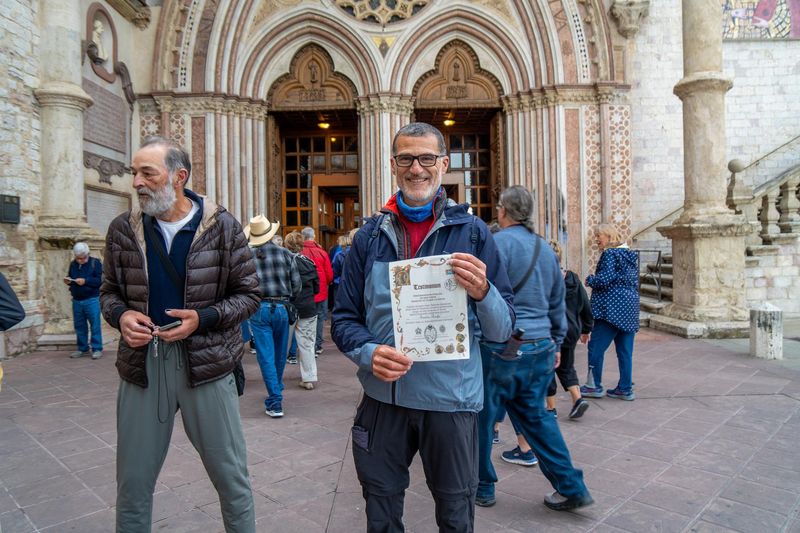
One thing I found really interesting while walking the Via di Francesco was the pilgrimage passport, also known as a credenziale.
If you are planning to walk part of the route, you do not necessarily need one, especially if you are only doing a short section like we did, but many walkers choose to get one as part of the experience.
Just like on the Camino de Santiago, pilgrims and walkers on the Via di Francesco can collect stamps along the route.
At churches, monasteries, visitor centres, and some hotels or cafés, you can stamp your passport as proof of your journey.
At every stop, there is a small sense of achievement, especially when you arrive somewhere on foot. And if you walk more than 100 kilometres, or cycle over 200 kilometres, you can actually receive an official certificate called the Testimonium, recognising your journey on the Via di Francesco.
Places like Assisi, Spello, and other stops along the way become meeting points for walkers and pilgrims from different parts of the world.
During our trip, we constantly saw walkers and cyclists passing through town. At one point, we met a lovely man in his 60s, who had already walked more than 500 kilometres from Bologna.
Walking from Assisi to Spello Along the Via degli Ulivi
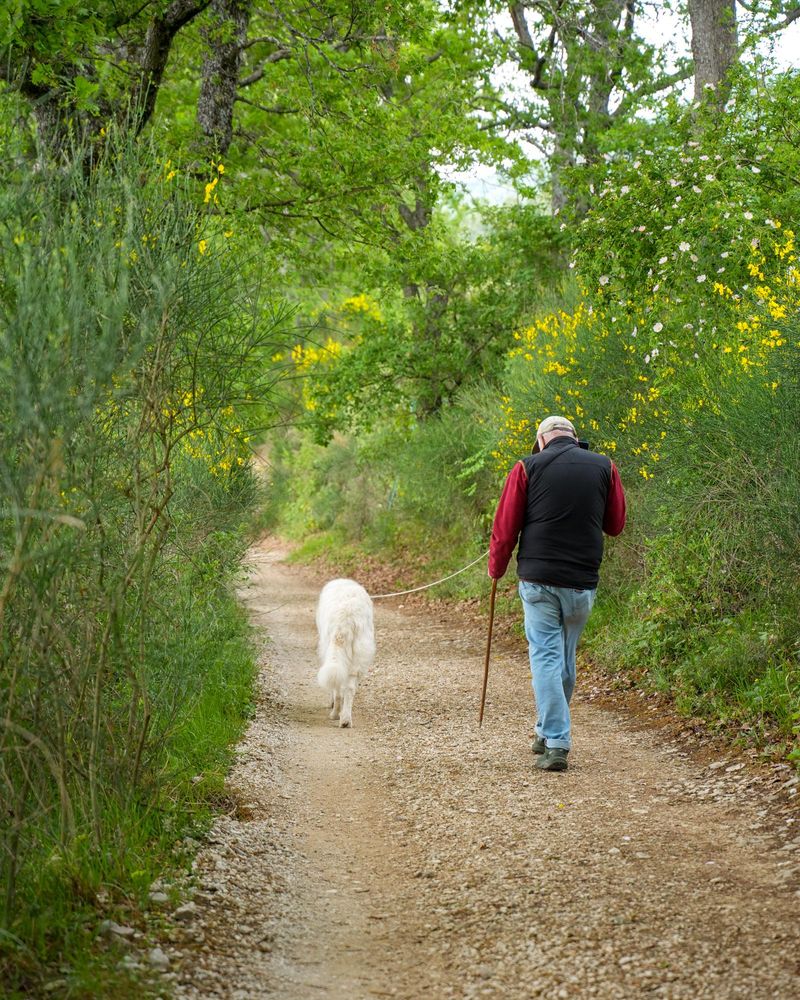
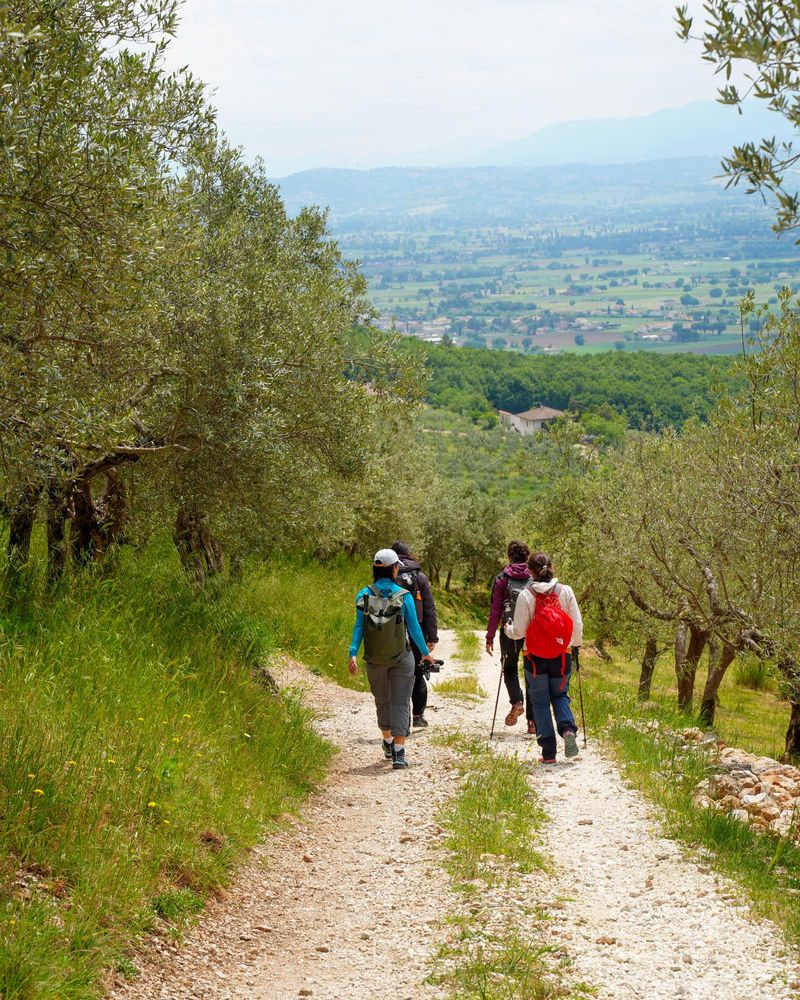
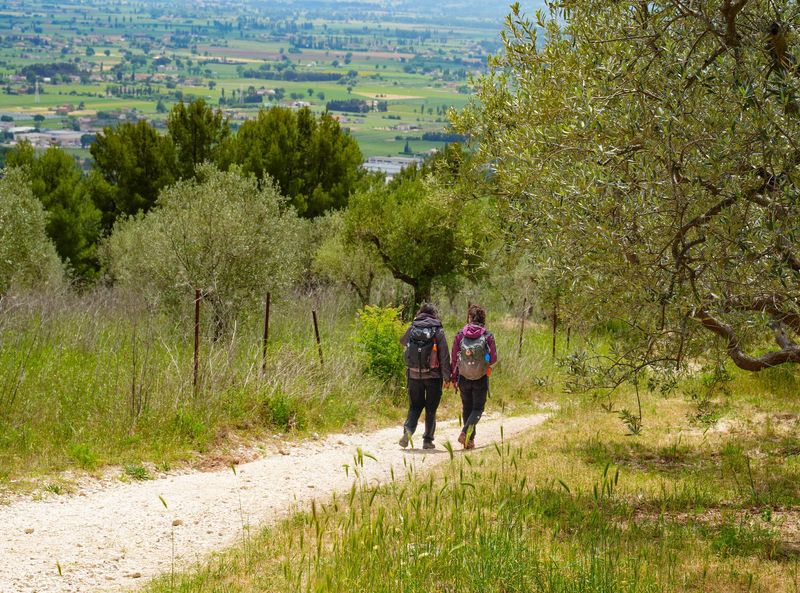
One of my favourite parts of the trip was walking from Assisi to Spello along the Via degli Ulivi, also known as the Olive Tree Path.
This section of the Via di Francesco is around 12 kilometres long and takes you through olive groves, rolling hills, countryside paths, and some of the most beautiful landscapes in Umbria.
The walk itself was manageable for most people with a reasonable fitness level, although there are some mild uphill and downhill sections.
Comfortable walking shoes are definitely important.
We picked up a picnic lunch in Assisi before leaving town, and, it was one of those simple travel moments that stays with you.
Walking slowly through the countryside, stopping for a picnic surrounded by olive trees, and seeing Assisi slowly disappear into the distance behind us felt completely different from typical city travel.
Note: If you are planning to do this walk in summer, especially in July or August, remember that temperatures can become very hot.
Bring plenty of water, sun protection, and try to start early in the morning.
Spello: One of Umbria’s Most Beautiful Villages
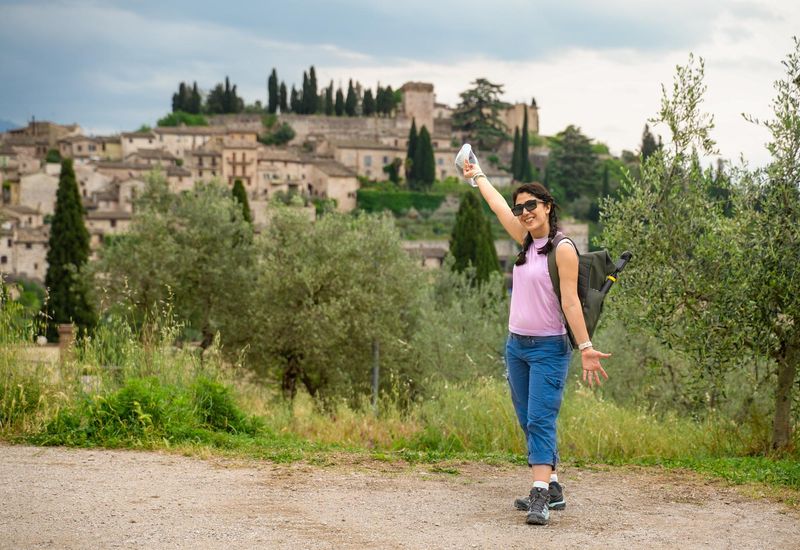
If you have never heard of Spello before, you are not alone. Even my Italian husband, Bruno, had never heard of it until this trip. But, this small medieval village ended up being one of my favourite places in Umbria.
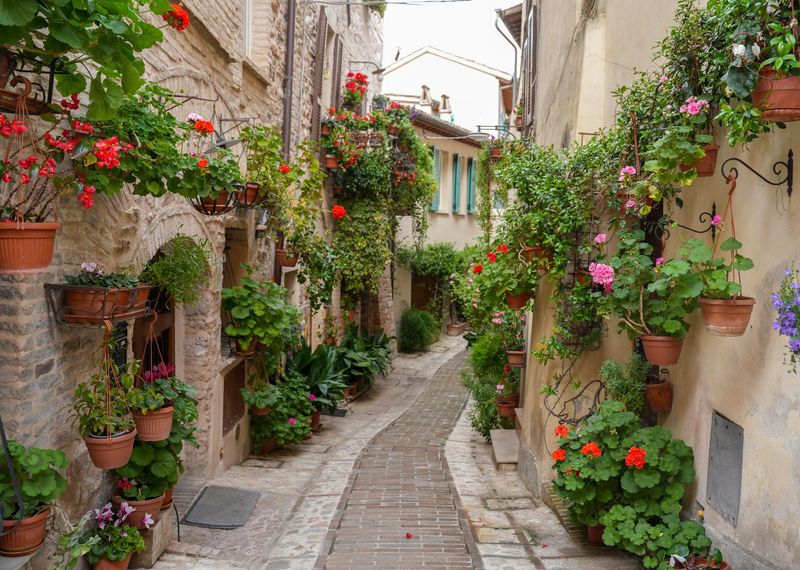
Spello is known for its narrow stone streets, Roman walls, flower-covered balconies, and peaceful atmosphere.
Every year, the village hosts the famous Infiorata festival, where locals create incredible artworks using flower petals.
Walking through Spello felt very different from visiting larger Italian cities.
People were sitting outside talking, locals knew each other, and everything felt slower in the best possible way.
After hours of walking, celebrating our arrival with Italian gelato somehow tasted even better.
We stayed at Hotel Cacciatore, which was a great base after a full day of walking from Assisi. After hours on the trail, being able to relax in a peaceful village like Spello somehow made the experience feel even more special.
Exploring the Sacred Forest of Monteluco and Spoleto
The final part of our trip included visiting the Sacred Forest of Monteluco near Spoleto.
This protected forest has long been associated with spirituality, silence, and retreat. Walking there felt completely different from the open landscapes around Assisi and Spello. The atmosphere was shaded, peaceful, and almost meditative.
One thing I found interesting about pilgrimage routes like the Via di Francesco is how many traditions and symbols still exist along the way.
For example, you will often see small piles of stones left by walkers. These stones symbolise burdens or worries people want to leave behind during the journey.
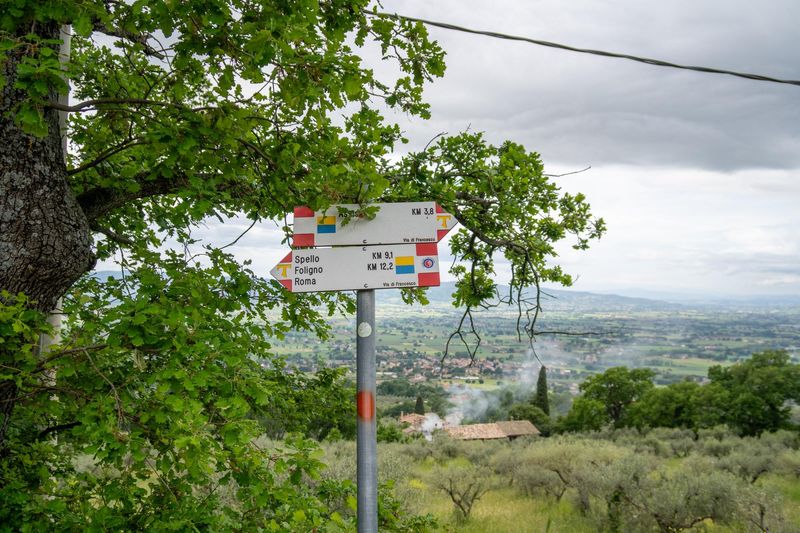
We also learned that the blue and yellow trail markers used along the Via di Francesco are easy to spot once you know what to look for.
The final walk towards Spoleto felt more reflective. We all knew the journey was slowly coming to an end, and somehow walking gave us time to pause and take everything in. And, Spoleto felt like the perfect finale.
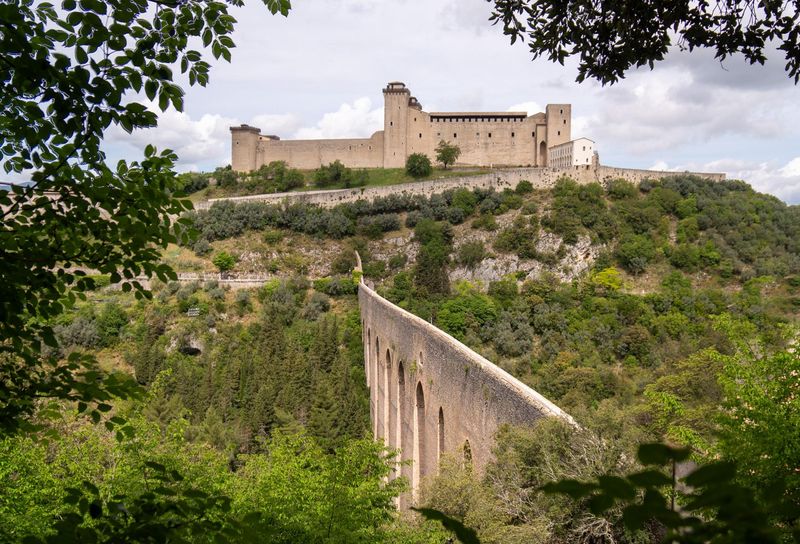
This historic Roman town is known for its medieval architecture, impressive fortress, and beautiful setting overlooking the valley.
What Makes This Different From Typical Travel in Italy
One of the reasons this trip stayed with me is because it felt so different from typical travel.
Usually, when people visit Italy, they move quickly between cities trying to see as much as possible.
But walking part of the Via di Francesco completely changed the pace of travel. Instead of rushing, you notice details.
The smell of olive trees. The sound of birds. The conversations in village squares. The feeling of arriving somewhere on foot.
And somehow, even the food tastes different.
Italian food is already famous around the world, but eating in small villages where locals actually eat feels completely different from tourist hotspots.
Maybe it is because you have spent hours walking, but honestly… everything tastes better when you feel like you have earned it.
Whether it is a simple plate of pasta, local olive oil, or an Italian gelato after a long day of walking, those small moments somehow become part of the experience.
Is the Via di Francesco Difficult?
The difficulty really depends on which section you choose. The route between Assisi and Spello is manageable for most people with a moderate level of fitness.
You do not need to walk the entire route to enjoy the experience.
Even a small section gives you a chance to experience the landscapes, villages, walking culture, and atmosphere that make the Via di Francesco so special.
Do You Need to Carry Your Luggage?
One thing many people do not realise about walking routes like the Via di Francesco is that you do not necessarily have to carry all of your luggage.
If the idea of hiking with a heavy backpack puts you off, companies like SloWays organise self-guided walking trips where your main suitcase is transferred from one hotel to another.
That means you only need to carry a small day pack with essentials like water, snacks, suncream, and a light layer.
What to Pack for the Via di Francesco
If you are planning to walk part of the Via di Francesco, here are a few essentials I would recommend bringing:
Comfortable walking shoes or hiking boots
A refillable water bottle
Suncream and a hat
Light layers for changing temperatures
A small backpack for snacks and water
Walking poles if you prefer extra support on hills
Even if you only plan to walk a shorter section, being prepared makes the experience much more enjoyable. To make things easier, I have put together a free walking and travel packing checklist with everything I personally recommend bringing for trips like this.
Best Time to Walk the Via di Francesco
Spring and autumn are probably the best times to walk the Via di Francesco.
During spring, the landscapes are green, flowers are blooming, and temperatures are comfortable for walking.
Autumn is also beautiful, with cooler weather and quieter trails.
Summer can become very hot, especially in exposed sections of the route.
If you plan to walk during summer, start early and bring plenty of water.
Where We Stayed on the Via di Francesco
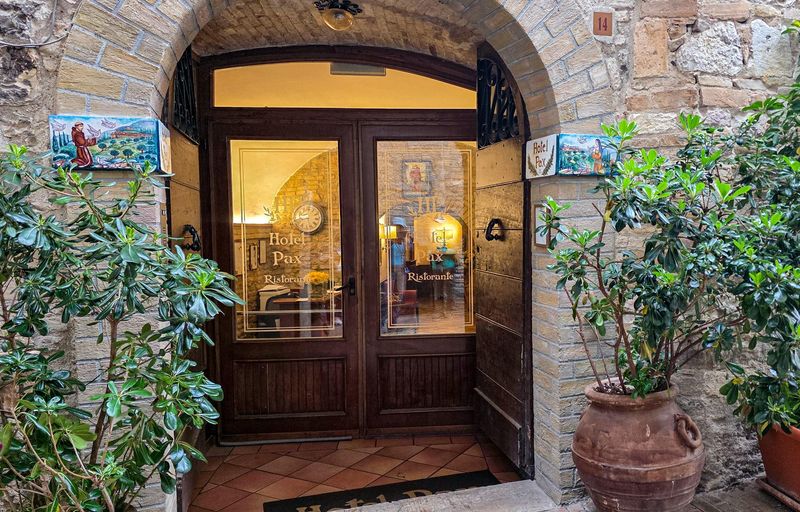
In Assisi, we stayed at Hotel Pax, a charming medieval-style hotel right in the historic centre.
The location was perfect for exploring the town on foot, and staying in the heart of Assisi made the experience feel even more immersive.
It was also within walking distance of the Basilica of Saint Francis.
In Spello, we stayed at Hotel Cacciatore after completing the walk from Assisi.
The hotel was conveniently located for exploring the village and relaxing after a long day of walking.
We did not stay overnight in Spoleto during this trip, but if I go back, I would love to stay at Palazzo Leti Residenza d’Epoca.
Set in a historic building with beautiful views over the Umbrian valley, it looks like the kind of place that perfectly matches the slower pace and atmosphere of this route.
Is the Via di Francesco Worth It?
Absolutely. Especially if you enjoy slow travel, walking holidays, hiking, nature, medieval villages, and discovering quieter parts of Italy.
What I loved most about this experience was not only the landscapes.
It was the feeling of slowing down. The conversations. The people we met. The quiet moments. The feeling of arriving somewhere on foot.
This trip reminded me that some of the best travel experiences happen when we stop rushing.