

Plitvice Lakes National Park is one of the most beautiful places in Croatia, with 16 lakes, countless waterfalls and UNESCO World Heritage status. There is no doubt it became one of the highlights of our Croatia road trip.
Famous for its turquoise lakes, wooden walkways, forest trails and waterfalls, Plitvice is the kind of place that almost doesn’t look real in photos. But when you are actually there, walking next to the clear water and hearing waterfalls all around you, it feels even more special.
We picked up a car in Zagreb and started our journey inland because we wanted to experience a different side of Croatia. Instead of rushing in and out of Plitvice on a day trip, we spent two nights in the area, and now I understand why so many people describe it as the most beautiful national park in Europe.
But Plitvice is also one of the most visited places in Croatia. If you don’t plan your visit properly, you can easily end up stuck behind crowds, queuing for boats, or rushing through the park without really enjoying it.
In this guide, I’ll share everything you need to know before visiting Plitvice Lakes National Park, including how to get there, where to stay, how tickets work, the best walking routes, what to pack, and my honest tips from our own visit.
Useful Plitvice Lakes tours and stays
Planning to stay near Plitvice and do something unique? Here are some fun activities and places to stay at Plitvice:
This post contains affiliate links, and if you click one, I may receive a small commission at no extra cost to you.
To make planning easier, I’ve also created a free Croatia packing checklist to help you pack for national parks, coastal towns, boat trips, waterfalls and road trips.
Download the packing checklist
Where is Plitvice Lakes National Park?
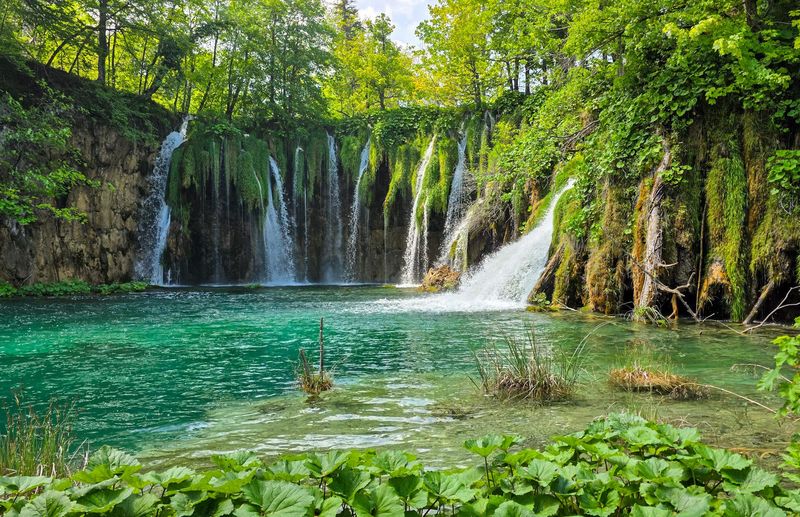
Plitvice Lakes National Park is located in central Croatia, between Zagreb and the Adriatic coast. This makes it a perfect stop on a Croatia road trip, especially if you are travelling from Zagreb towards Zadar, Split or other parts of the coast.
This is exactly what we did. We started our road trip in Zagreb, drove inland to visit Plitvice Lakes, and then continued towards the coast, stopping in Zadar and Split.
But don’t worry if you are flying into Split, Zadar or another part of Croatia. The country is not huge, so you can still visit Plitvice by car, bus or as part of a guided tour.
Is Plitvice Lakes a must-see?
Yes, absolutely. Even if you are travelling to Croatia for the coast, beaches or sailing, you should spare at least one day to visit this unique national park.
I have visited many national parks in Europe and around the world, and trust me, Plitvice is not one you want to miss.
How much time do you need in Plitvice Lakes?
You need at least one full day to visit Plitvice Lakes National Park, but I personally think staying nearby for one night or two makes the experience much better.
Many people visit Plitvice as a day trip from Zagreb, Zadar or Split. This is possible, and I understand if you don’t have much time. But it usually means arriving at the same time as tour groups and trying to see the park during the busiest hours of the day.
We stayed in the area for two nights, which meant we could arrive early, explore slowly, and enjoy the area around Plitvice too.
There is more to do nearby than many people realise, including visiting Rastoke, kayaking, zip lining, ATV or buggy tours, and countryside drives.
You can also read: Best places to stay in Plitvice
Best time to visit Plitvice Lakes National Park
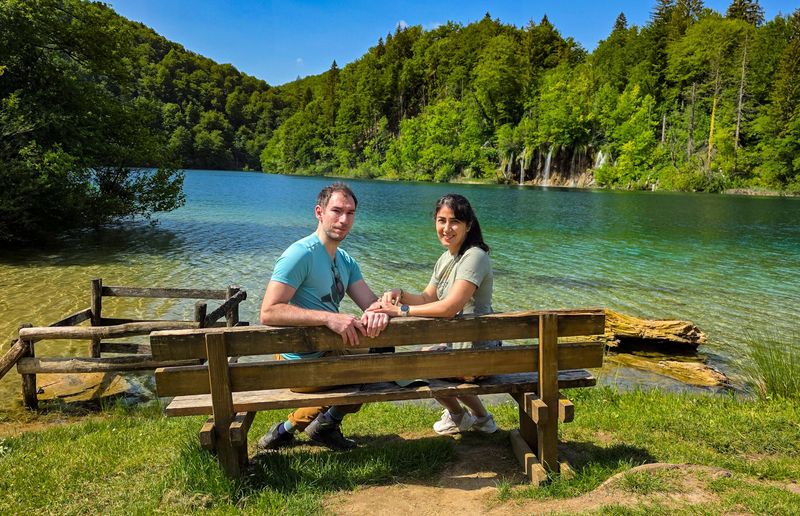
The best time to visit Plitvice Lakes National Park is spring or autumn, when the weather is pleasant, and the park is usually less crowded than in summer.
We visited in late June, and it was already hot enough to make me realise I wouldn’t want to visit in the middle of summer. It was around 30°C, and even though much of the park is shaded, you still spend hours walking, queuing, and being outdoors.
I would try to avoid summer if you can, especially July and August. This is the busiest season, and it can get extremely hot. But if summer is the only time you can visit, be prepared for the heat, bigger crowds, higher ticket prices, and longer queues for boats, restaurants and narrow walkways.
We visited on a weekend, and even though we arrived early, we could already see tour groups entering the park around 8:30am. Later in the day, some areas became much busier, especially near the main attractions and boat stops. By the time we left in the afternoon, the queue for the boats looked like it could take at least an hour.
If you visit in summer, my biggest advice is:
Book your ticket in advance
Choose an early time slot
Arrive before the big tour groups
Bring snacks and water
Be patient on the narrow paths
Walk beyond the busiest areas if you want quieter moments
Winter can also be beautiful, especially if there is snow, but some routes, boats or areas may be limited depending on the weather.
Do you need to book Plitvice Lakes tickets in advance?
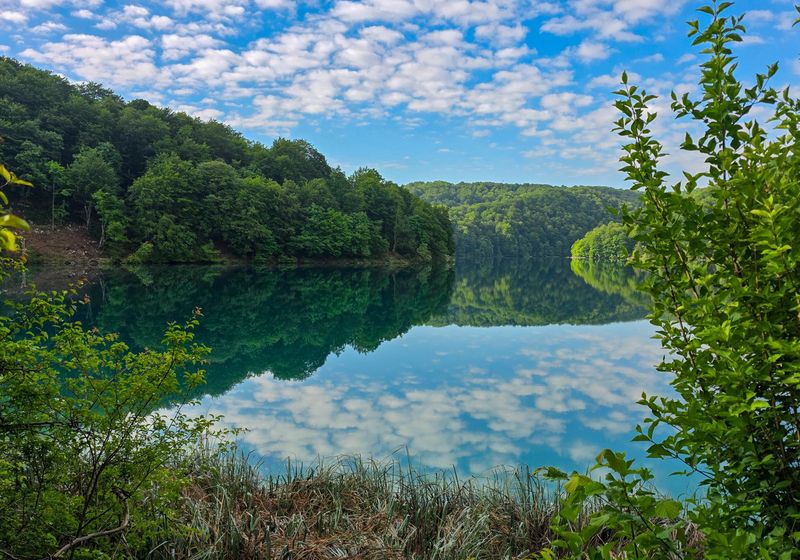
Yes, I recommend booking your Plitvice Lakes ticket in advance, especially if you are visiting in summer, at weekends or during holidays. The early time slots can book up fast, and these are the ones I would choose if you want to avoid the worst of the crowds.
When you book your ticket, you choose an entrance and a time slot. If you are entering through one of the main entrances, make sure you arrive within the time window on your ticket.
During our visit, we had tickets for the North Entrance, but because we were staying at Plitvica Lodge, we used a smaller entrance close to our accommodation. It still wasn’t a free entrance; our tickets were checked. But it meant we avoided some of the crowds at the main entrance, and the timing felt a little more flexible.
This was one of the best decisions we made.
Which Plitvice Lakes entrance should you book?
The best entrance depends on your route, where you are staying, and what you want to see first.
Many first-time visitors choose Entrance 1 / North Entrance because it gives you easy access to the Lower Lakes and Veliki Slap, the tallest waterfall in Croatia.
Entrance 2 / South Entrance is usually better if you want to start closer to the Upper Lakes or follow one of the longer routes through the park.
There isn’t one perfect entrance for everyone. If you want to see the most famous waterfall first, Entrance 1 is a good choice. If you prefer to start with the Upper Lakes or a longer route, Entrance 2 may work better.
What is included in a Plitvice Lakes ticket?
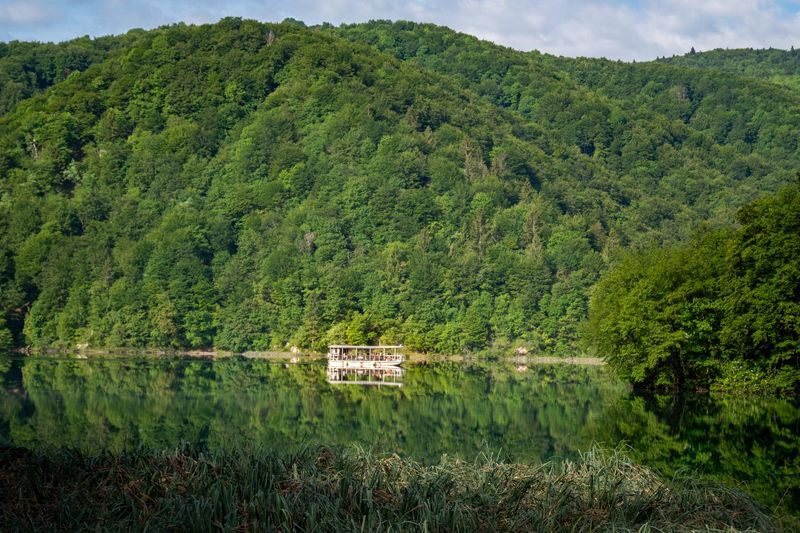
Your Plitvice Lakes entrance ticket includes access to the national park, as well as the electric boats and panoramic trains inside the park.
This makes it easier to explore different areas without walking the entire distance. It also means Plitvice can work for different fitness levels, because you can choose a shorter route or combine walking with the boat and train.
That said, you should still expect to walk. Even the easier routes include steps, wooden walkways and uneven surfaces in places, so comfortable shoes are essential.
Even if you prefer to walk as much as possible, you will probably need to take a boat at least once, depending on the route you choose. We mostly walked during our visit, but we still had to take the boat to cross the lake and continue towards the Upper Lakes, which you can see in our video.
Can you swim in Plitvice Lakes?
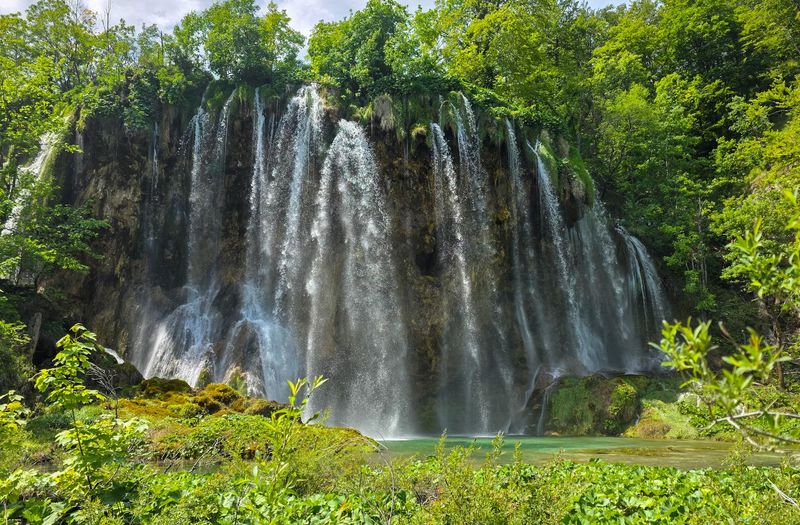
This is one of the most asked questions about Plitvice Lakes, and the answer is no, you cannot swim in Plitvice Lakes.
The water looks incredibly tempting because it is so clear, colourful and beautiful, but swimming is strictly prohibited. Plitvice is a protected national park and a UNESCO World Heritage Site, so visitors must stay on the marked paths and follow the park rules.
Is Plitvice Lakes good for families or people with limited mobility?
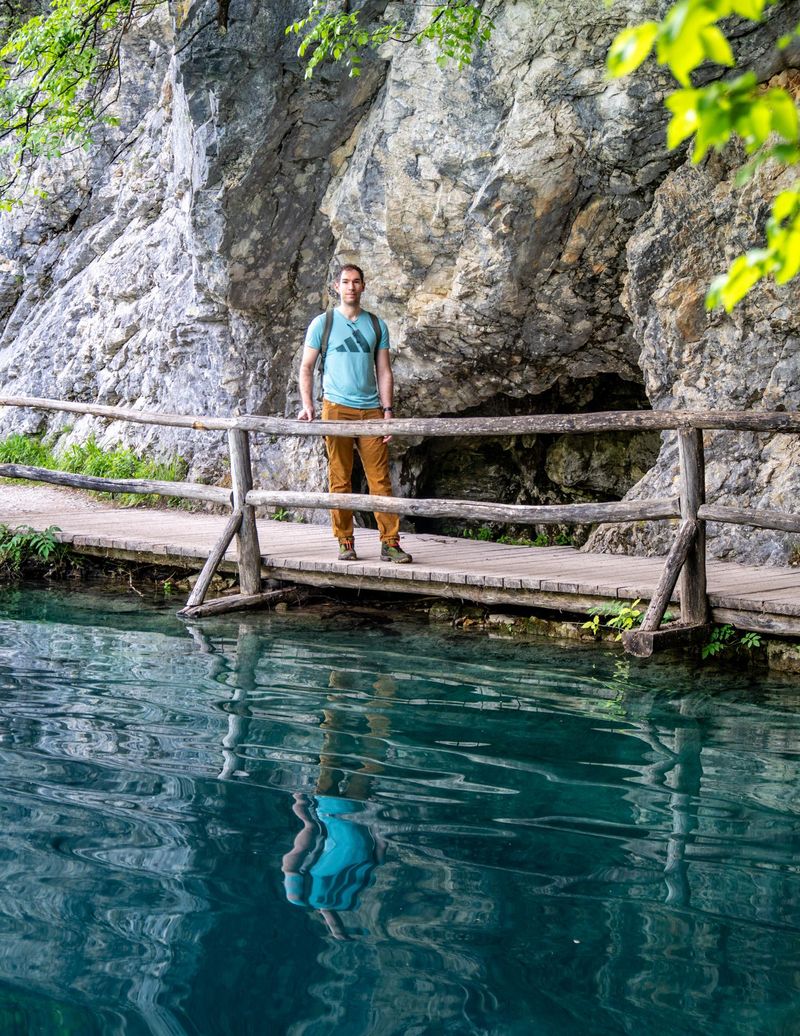
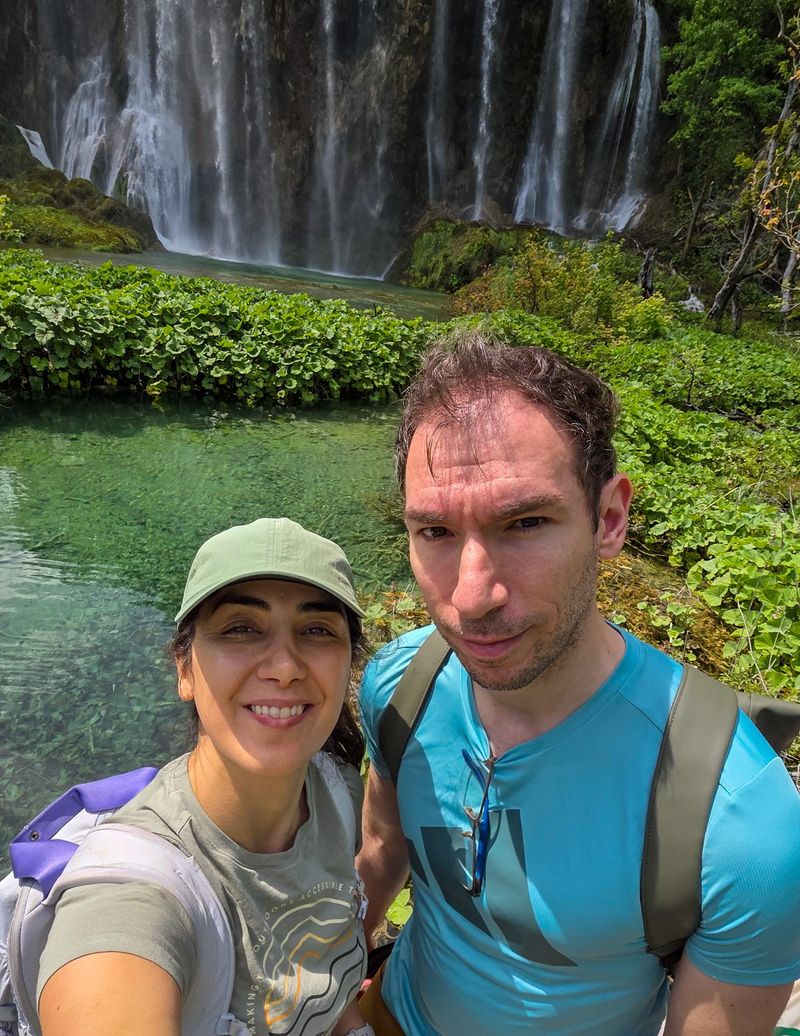
Yes, Plitvice Lakes can be a good place to visit for families and people who don’t want a difficult hike, as long as you choose the right route.
This was our first trip after Bruno broke his ankle and couldn’t walk properly for almost two months. Plitvice was his first long walk without crutches, and he still managed around 10 km in the park.
The paths are not difficult in terms of hiking, and you don’t need to climb a mountain to enjoy the views. You can see lakes, waterfalls and beautiful scenery quite early in the walk.
That said, there are steps, wooden walkways, uneven surfaces and some narrow sections, so it may not be suitable for every mobility level. If you are visiting with young children, older travellers, or someone recovering from an injury, choose a shorter route and use the boats and panoramic trains where possible.
Which Plitvice Lakes route should you choose?
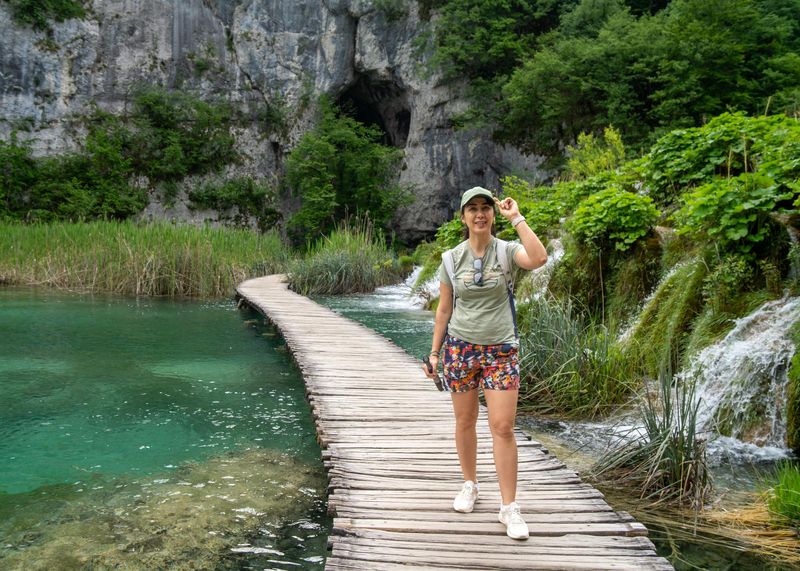
There are several walking routes in Plitvice Lakes National Park, ranging from shorter walks to longer routes that take most of the day.
You can choose your route based on how much time you have, your fitness level, which entrance you use, and whether you want to see both the Lower Lakes and Upper Lakes. It is also worth checking the route before you start, either on the official park map or on AllTrails, so you have a better idea of the distance and what to expect.
If you have a full day, I recommend choosing a longer route that includes both the Lower Lakes and Upper Lakes. This gives you a better sense of the park, because the scenery changes as you go. This is what we did, and it also allowed us to experience some of the quieter, more peaceful parts of the park that many group tours seem to skip.
The Lower Lakes are where you will find some of the most famous viewpoints and Veliki Slap, the tallest waterfall in Croatia. This area is beautiful, but it is also where many visitors and tour groups go first.
I personally liked the Upper Lakes even more. The route felt more diverse, the paths were more peaceful, and we walked past waterfalls, lakes and forested areas with fewer crowds than some of the lower sections.
In my opinion, if you only visit the main waterfall and leave, you miss a lot of what makes Plitvice special.
Main attractions in Plitvice Lakes National Park
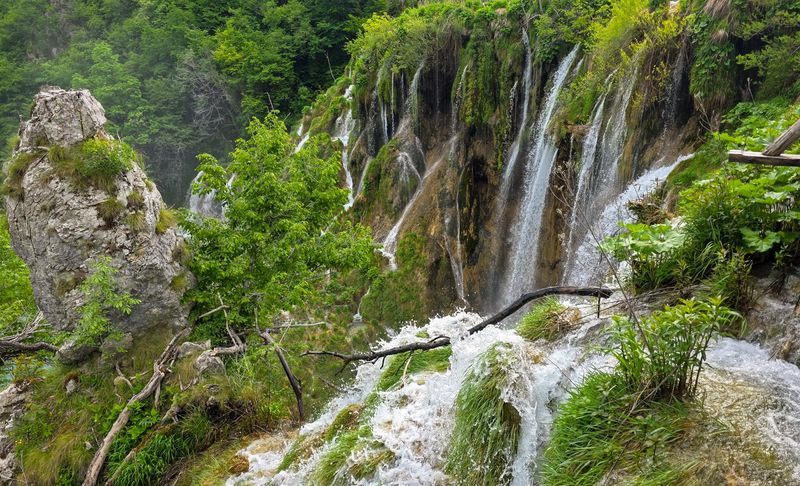
The most famous attraction in Plitvice Lakes National Park is Veliki Slap, the tallest waterfall in Croatia. It is one of the places most visitors want to see first, so it can get very crowded, especially later in the day.
The Croatian word for waterfall is “slap”, so when you see names like Veliki Slap or Mali Slap, now you know what it means.
But Veliki Slap is not the only highlight of the park. The Lower Lakes are where you will find some of the most famous viewpoints, dramatic waterfalls and wooden walkways, while the Upper Lakes feel more peaceful and diverse, with forest paths, smaller waterfalls and beautiful lake views.
One of the best parts of visiting Plitvice is that the scenery keeps changing as you walk. You move from busy viewpoints to quiet forest paths, from wooden walkways over clear water to waterfalls hidden between the trees.
Can you visit Plitvice Lakes without a tour?
Yes, Plitvice Lakes is very easy to visit independently. You don’t need to join a big group tour unless you prefer that style of travel or you don’t want to drive. The park is well organised, with marked routes, boats, panoramic trains and signs.
We explored independently, and I preferred it because we could go at our own pace. We could stop for photos, sit by the lake, wait for crowds to pass, and choose quieter paths when we wanted.
If you are staying in Zagreb, Zadar or Split and don’t want to rent a car, then a guided day trip can be a good option.
Is Plitvice a day trip or worth staying overnight?
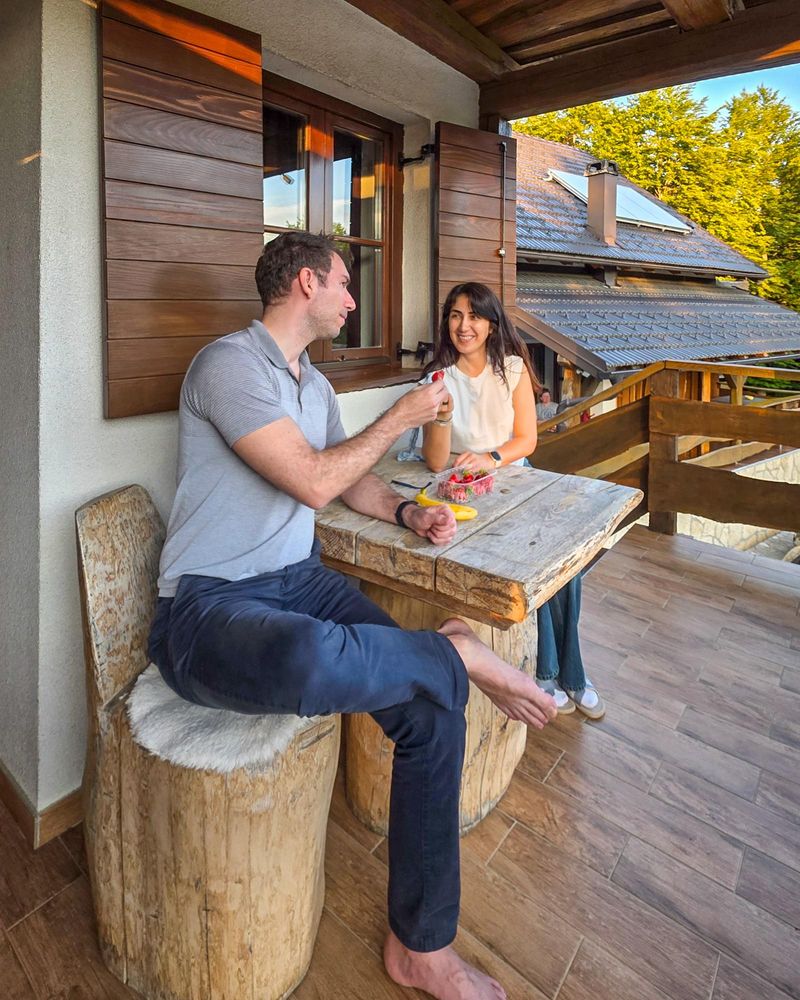
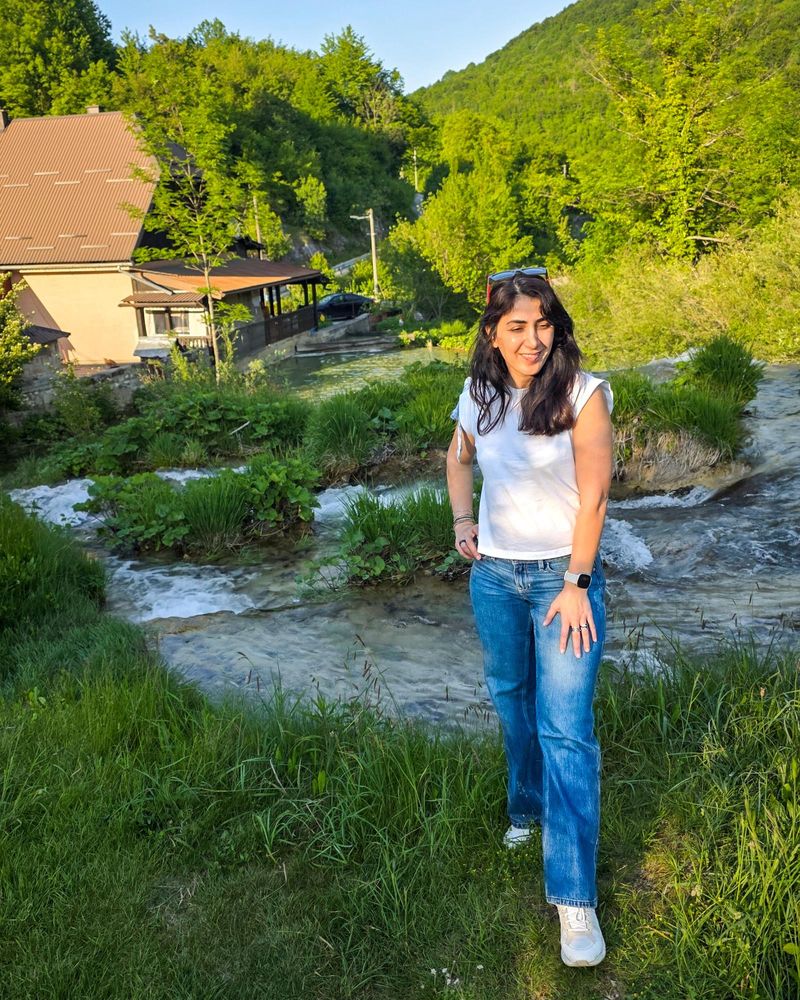
You can visit Plitvice Lakes as a day trip from Zagreb, Zadar or Split, but I personally think staying nearby for at least one night gives you a much better experience.
If you visit on a day trip, you will probably arrive around the same time as many tour groups, which means exploring the park during the busiest hours. This is especially true in summer and at weekends.
We stayed at Plitvica Lodge, just outside one of the entrances, for two nights, and it made our visit feel much more relaxed. We could arrive early, avoid the worst of the crowds, take our time in the park, and also explore more of the surrounding area.
How to get to Plitvice Lakes National Park
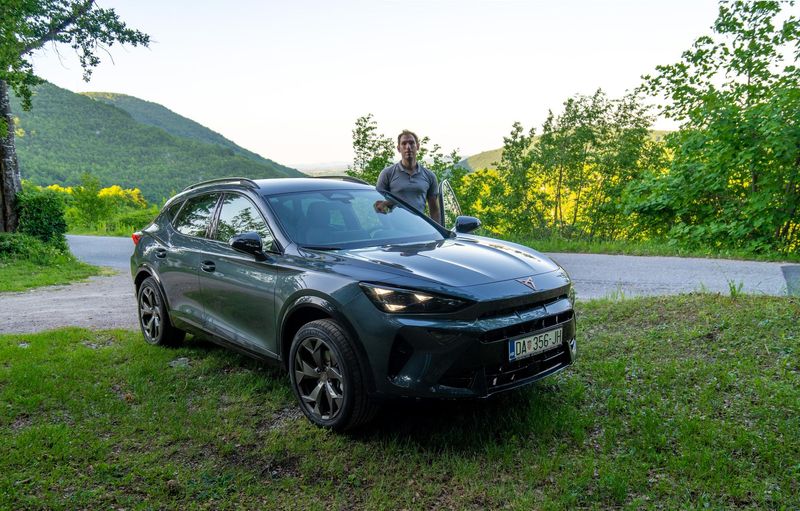
The easiest way to visit Plitvice Lakes is by car. If you want to see different parts of Croatia and turn your trip into a proper road trip, I highly recommend renting a car.
Driving gives you much more flexibility, especially if you want to arrive early, stay nearby, stop in Rastoke on the way, or continue towards Zadar, Split or the coast afterwards.
You can also reach Plitvice by bus from Zagreb, Zadar or Split, but you will need to check the current schedules and plan carefully around your ticket time slot.
Another option is to join a group tour. This is not my favourite way to visit Plitvice, because you have less flexibility and usually arrive when the park is already busy. But if you don’t want to rent a car, it can still be a practical option.
Internet and eSIM in Croatia
Having mobile data in Croatia made our road trip much easier. We used it for maps, checking opening times, booking tickets, finding restaurants, and staying connected while driving between places.
For this Croatia road trip, I used Simify, which offers unlimited data. The coverage was great for us, and I had internet almost everywhere, including on the road, in national parks and even while we were out on the sea.
You don’t want to arrive at the national park and struggle to find your booking confirmation, check your route or navigate to your accommodation, so I recommend sorting your internet before the trip.
Things to do near Plitvice Lakes
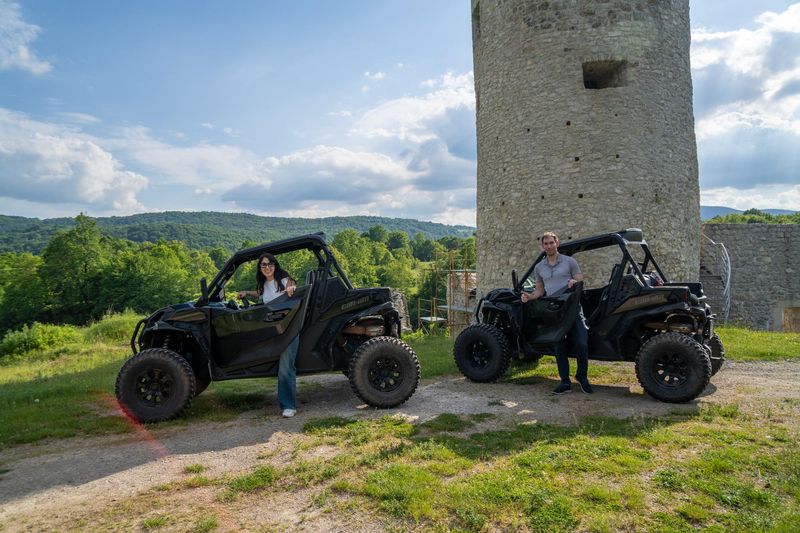
Many people only visit the national park and leave, but there are actually quite a few things to do near Plitvice Lakes.
During our stay, we did a buggy tour, visited an old fortress, saw an abandoned Douglas C-47 plane, drove on an abandoned military runway, explored part of the Željava Air Base area, and visited Korana Village.
There are also options for kayaking, zip lining, ATV tours and countryside activities.
If you have a car, I also recommend stopping in Rastoke, a beautiful watermill village between Zagreb and Plitvice. We actually went there twice: once on our way from Zagreb to Plitvice, when we walked around and had ice cream, and another time just for dinner. For dinner, we went to Restoran Ambar, which had a lovely outdoor atmosphere and made a nice stop after a day of exploring.
Rastoke is small, but it is a lovely place to wander around, see the waterfalls and wooden houses, and have something to eat before or after visiting Plitvice.
This is why I think Plitvice works really well as part of a road trip, not just a quick day trip. The national park is the main reason to come, but the area around it adds more adventure to the journey.
Food and restaurants inside Plitvice Lakes
There are a few cafes and restaurants inside Plitvice Lakes National Park, but they are not everywhere, so it is worth planning ahead.
You will find food options near some of the main stops and boat areas, but they can get very busy, especially around lunchtime. When we came back towards one of the main restaurant areas, there were queues for almost everything.
The food inside the park is also quite simple, mostly things like burgers, sandwiches, snacks and drinks, so don’t expect a big restaurant experience.
If you are visiting in peak season, I recommend bringing snacks or a packed lunch so you are not completely dependent on the restaurants inside the park.
How to visit Plitvice Lakes responsibly
Plitvice is a protected national park, and I know most people who visit are respectful of nature. But because this park receives so many visitors, we all need to be a little more careful.
Even small actions can damage a place like this over time, so please stay on the marked paths, don’t swim in the lakes, don’t feed wildlife, and don’t climb over barriers just to get a photo.
The park is beautiful because it is protected, and the best thing we can do as visitors is enjoy it while helping to keep it that way.
Tips for taking photos in Plitvice Lakes
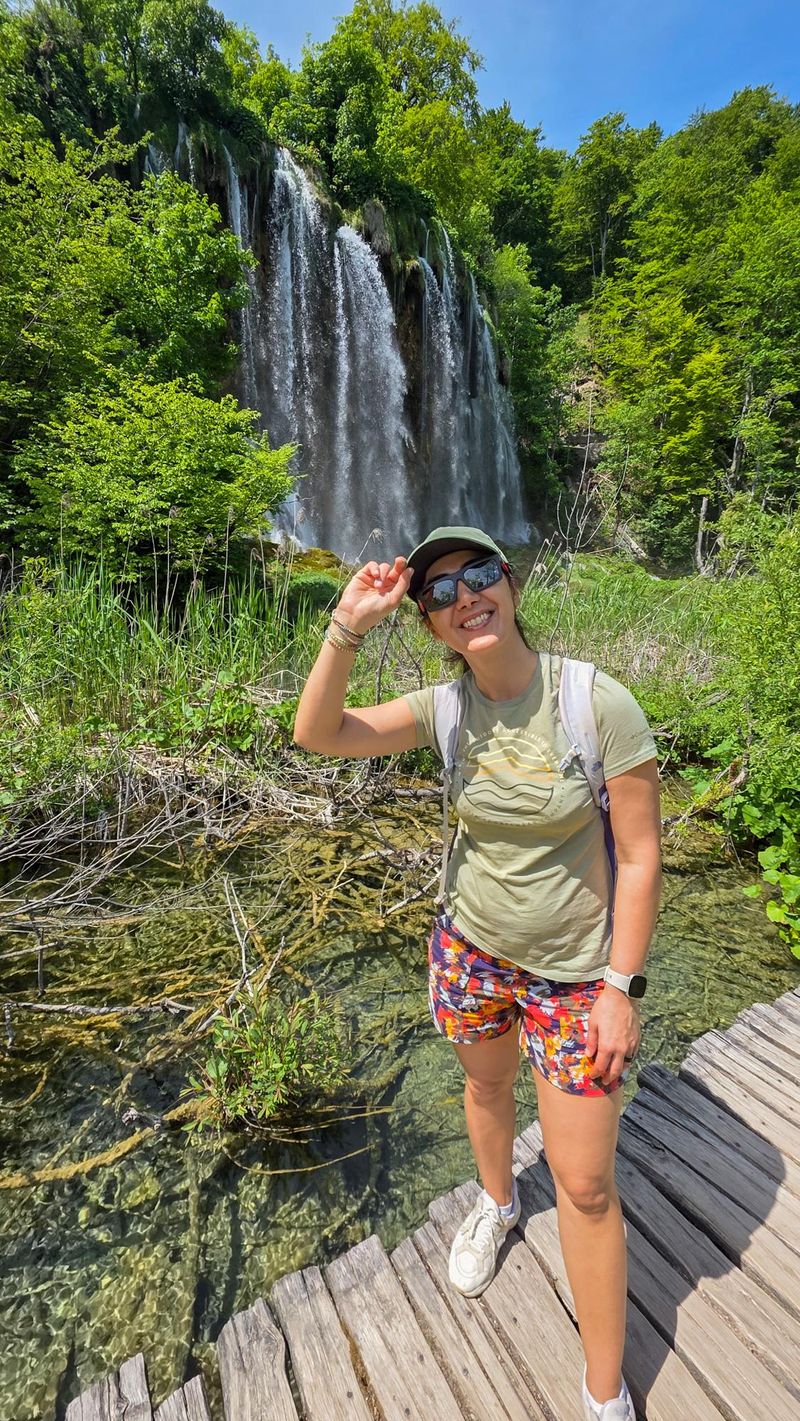
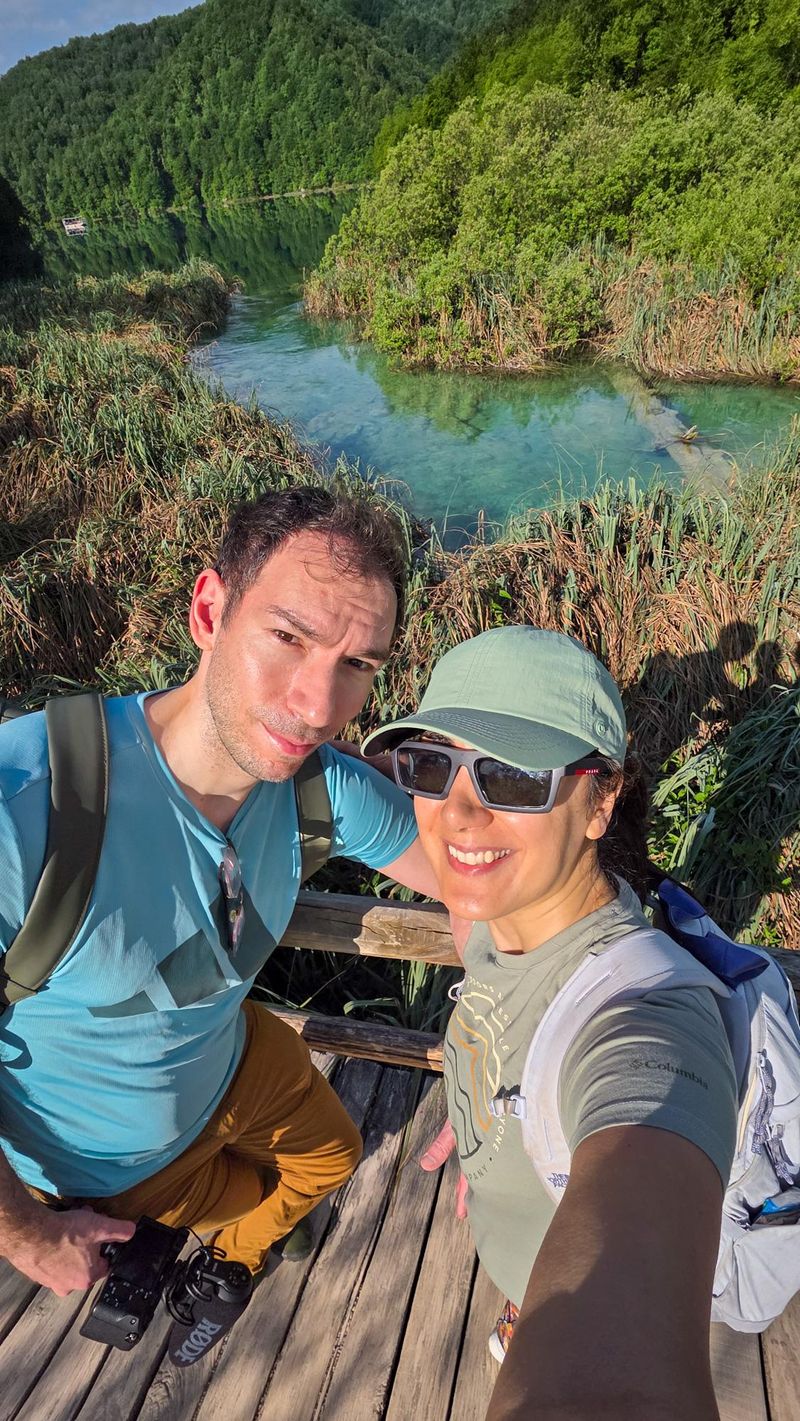
Plitvice Lakes is one of the most photogenic places in Croatia, but it can also be tricky to photograph when the park is busy.
My first tip is to arrive early. You will have fewer people on the paths, softer light for photos, and a much better chance of enjoying the waterfalls and lakes without feeling rushed.
You also need to be patient. Some of the paths are very narrow, so don’t block the walkway for too long, especially when people are trying to pass. If a boat has just arrived or a big group tour is walking through, wait a few minutes and let them move on. Usually, you will get a quieter moment before the next boat or group arrives.
Some of my favourite photos were not from the busiest viewpoints, but from quieter corners of the park where we simply waited, slowed down, and looked around. Walk a little further, explore the Upper Lakes, and don’t feel like you need to take the same photo as everyone else.