

When people think of Japan, they usually imagine Tokyo’s neon lights, Kyoto’s temples, sushi, and Osaka’s famous cafés, not scuba diving. But Okinawa completely surprised me.
Okinawa is indeed a lesser-known destination in Japan, with beautiful sandy beaches, crystal-clear water, and a much more tropical feel compared to mainland Japan. I already wrote a full guide about the best things to do in Okinawa, but if I’m honest, Bruno and I mostly went there for scuba diving.
With colourful coral reefs and visibility reaching up to 30 metres on a good day, Okinawa is considered one of the best places to scuba dive in Japan. Depending on the season and dive site, you may even spot sea turtles, reef sharks, and manta rays.
We spent two days diving around the famous Kerama Islands, exploring different dive sites, from calm reef gardens and sandy seabeds to more advanced drift dives with stronger currents.
In this guide, I’ll share everything you need to know about diving in Okinawa, including the best time to go, where to stay, how to book a dive tour, and the best dive sites in Okinawa based on both our experience and where I would love to dive next.
This post contains affiliate links, and if you click one, I may receive a small commission at no extra cost to you.
Useful Diving Essentials for Okinawa
Before your dive trip to Okinawa, there are a couple of things I would personally recommend bringing with you.
Your Dive Logbook: Most dive centres in Okinawa will ask to see your logbook before letting you join a fun dive. It's how they verify your certification level and experience.
An Anti-Fog Mask: With visibility reaching up to 30 metres in Okinawa, the last thing you want is a fogged-up mask ruining the view. I use the Tidal Diving mask, which has proper anti-fog technology built in rather than relying on the old spit-and-hope method. It made a real difference for me, especially on longer dives. You can get 20% off with my code MANSOUREH
Why Okinawa Is One of the Best Places to Dive in Japan
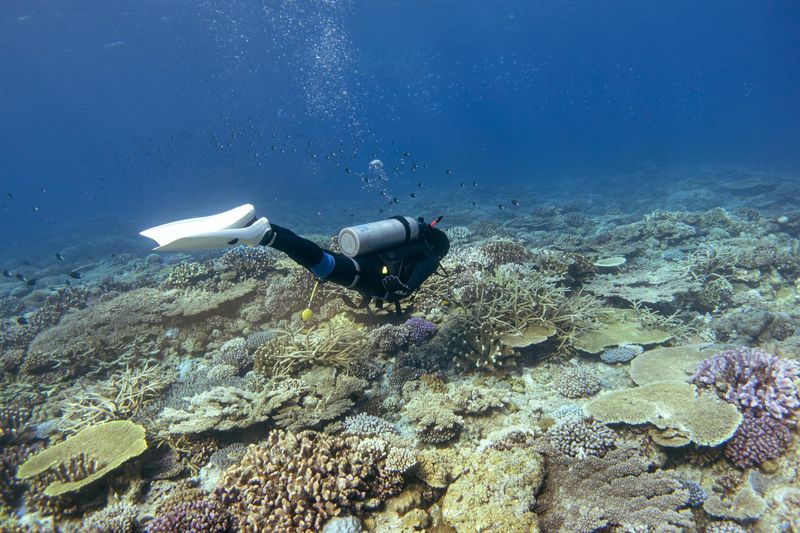
If you ask me, Okinawa feels like a completely different side of Japan. While mainland Japan is famous for cities, temples, and mountains, Okinawa has a much more tropical feel, and that continues underwater too.
Okinawa is considered one of the best places to scuba dive in Japan thanks to its warm subtropical climate, colourful coral reefs, crystal-clear visibility, and diverse marine life. Depending on the season and luck, you may spot sea turtles, reef sharks, schools of tropical fish, and even manta rays.
One of the best places to dive in Okinawa is the Kerama Shoto National Park, which is where we spent most of our time underwater.
Usually, it takes around 40 minutes to one hour by boat from Naha to reach the Kerama Islands, depending on sea conditions. Kerama is actually a group of islands, and each dive site offers a slightly different experience, from calm reef gardens and sandy seabeds to stronger currents and drift dives for more experienced divers.
Best Time to Dive in Okinawa
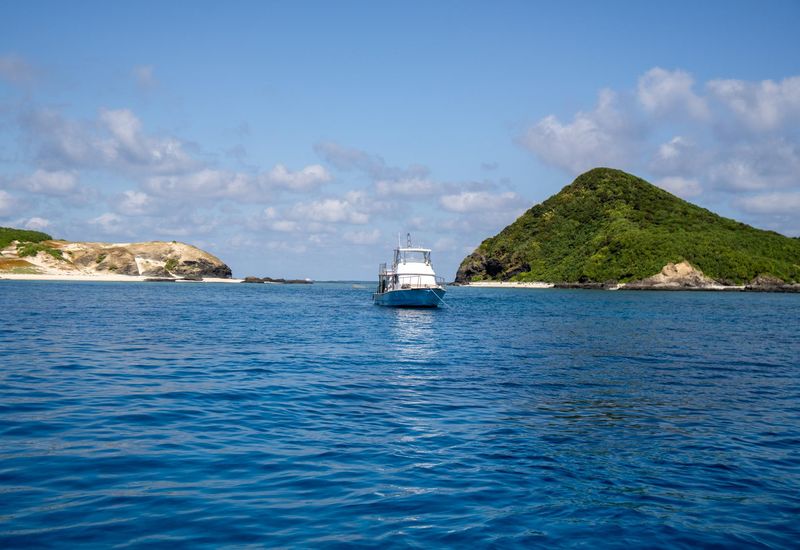
One of the reasons Okinawa is such a great diving destination is that you can dive here almost all year round.
However, the best time to dive in Okinawa is generally between late spring and autumn, when the water is warmer, and visibility is often at its best. Summer months are especially popular, with water temperatures reaching around 26–29°C.
We visited in October, and honestly, the conditions were fantastic. The water temperature was around 28°C, visibility reached up to 30 metres on some dives, and the sea was calm enough to enjoy long, relaxed dives.
That said, October can still be part of typhoon season in Okinawa, so it’s something to keep in mind when planning your trip. In our case, we actually couldn’t dive for a few days because of the weather.
Luckily, we had planned for this and gave ourselves extra time in Okinawa just in case. If diving is one of the main reasons for your trip, I would definitely recommend staying a little longer than you think you need. That flexibility can make a huge difference if the weather changes unexpectedly.
Winter diving is still possible in Okinawa, although the water gets cooler and conditions can sometimes be more unpredictable. If seeing larger marine life is your priority, some divers specifically visit during cooler months for seasonal sightings such as hammerhead sharks in certain areas.
Where to Stay for Diving in Okinawa
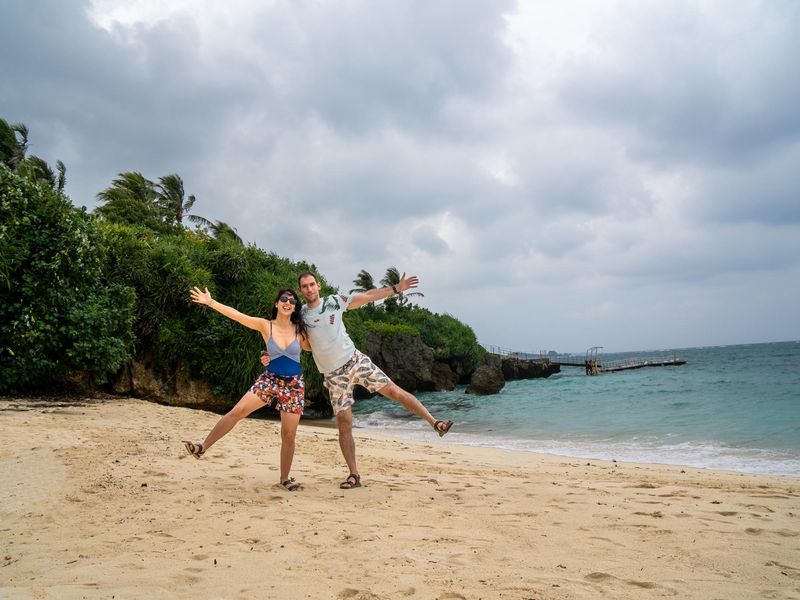
If scuba diving is one of the main reasons for visiting Okinawa, I would highly recommend staying in Naha.
As I mentioned in my Okinawa guide, Naha is definitely one of the best places to stay on the island, especially for divers. Most dive centres are based here, and many offer free hotel pick-up before taking you to the port, where you’ll board the boat for the day.
Honestly, this made everything feel much easier for us. Diving days usually start early, so being picked up directly from your hotel in the morning and transferred to the port takes away a lot of the stress.
If you stay in other parts of Okinawa, you’ll most likely need to arrange your own transport to the dive centre or port, which can make logistics more complicated.
We stayed at Hotel Aqua Citta in Naha during our trip, and for diving, I think it was definitely the right choice.
If you’re planning to dive in the Kerama Islands, basing yourself in Naha simply makes the whole experience much more convenient.
How to Book a Dive Tour in Okinawa
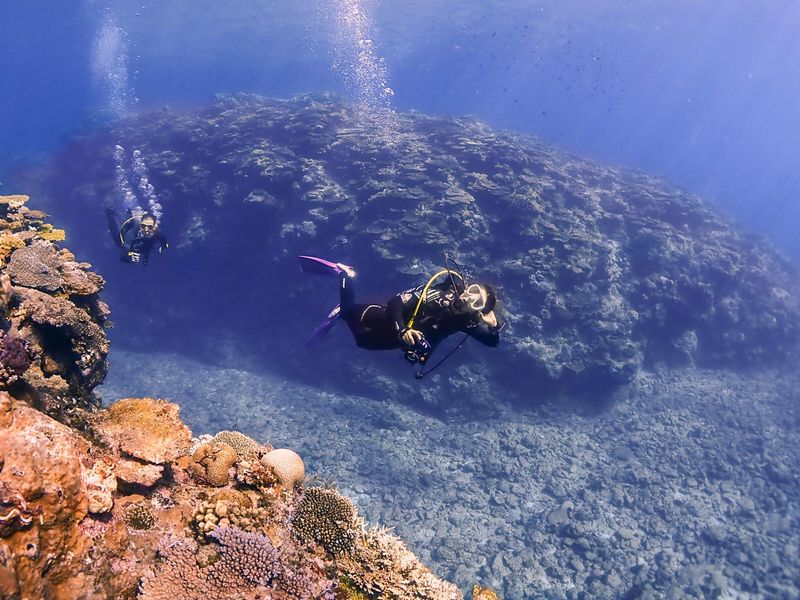
Booking a dive tour in Okinawa felt a little different compared to other diving destinations we have visited.
Most dive centres are based in Naha, but they are spread out across the city and not necessarily close to each other, so simply walking in and booking last minute is not always practical. If scuba diving is one of the main reasons for your trip, I would definitely recommend booking in advance.
Another thing worth keeping in mind is that although many dive centres are based in Naha, not all of them are English-speaking.
Most dive centres offer full-day diving trips to the Kerama Islands, which usually include boat transfers, tanks, weights, and sometimes equipment rental. Depending on the company, hotel pick-up in Naha may also be included, which makes the whole experience much easier.
If you’re already certified, you can join fun dives, while beginners can often book discovery dives or introductory scuba experiences. Some dive sites are very calm and beginner-friendly, while others, especially drift dives with stronger currents, are more suitable for experienced divers.
To save you hours of searching, I actually created a free downloadable list of English-speaking dive centres in Okinawa, including contact details and useful information to help you plan your trip.
Download the Okinawa dive centre list
Best Dive Sites in Okinawa
During our trip, we spent two days diving around the famous Kerama Islands, which are part of the Kerama Shoto National Park. What blew me away about diving in Okinawa was the sheer variety. Even within the same marine park, every site had a distinct atmosphere, varying currents, and unique underwater topography.
Here are some of the best dive sites in Okinawa, including the ones we explored and a few I would personally love to experience next time.
1. Mae Island (Maejima)
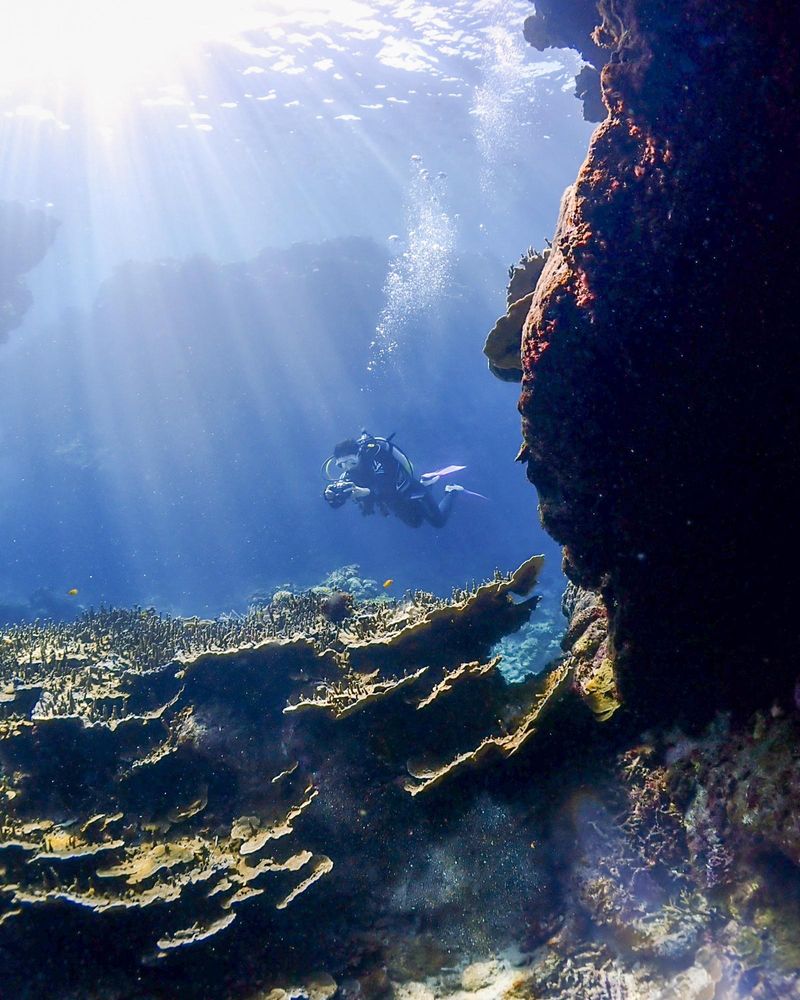
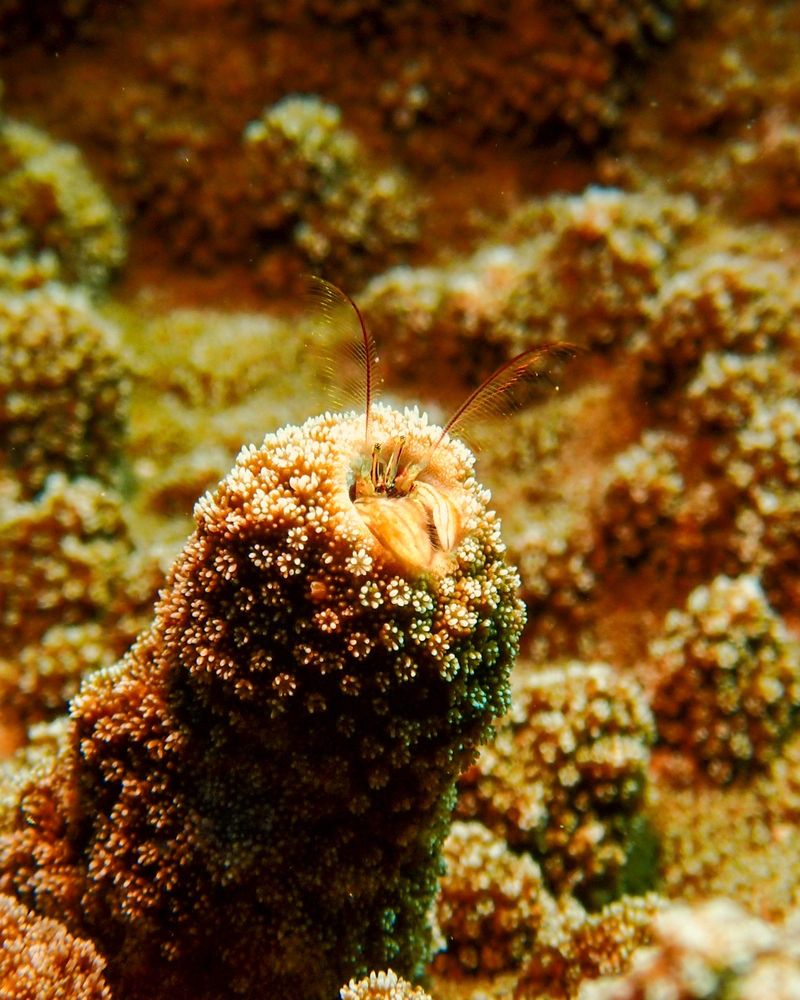
Our very first underwater experience in Okinawa was around Mae Island, a small, uninhabited island in the eastern part of the Kerama group. If you prefer relaxed, scenic diving, this is the perfect place to start.
Average Depth 5 – 15 metres
Experience Level Beginner / Open Water
Main Highlights Natural swim-throughs, white sand seabeds, sea turtles
Mae Island is known for its calm conditions, sandy seabeds, colourful coral formations, and relaxed diving atmosphere. Because of the shallow depth and usually gentle conditions, it is considered a great dive site for beginners and less experienced divers.
On our dives here, visibility was excellent, and the standout feature here is the underwater topography. The sandy bottom reflected the sunlight beautifully, making everything feel brighter underwater, while the reef gardens added plenty of colour and marine life.
We navigated through spectacular natural rock formations and swim-throughs. Gliding through these stone arches makes the dive feel like a genuine adventure, and the way the morning sunlight cuts through the gaps is visually stunning.
Kamiyama / Chibishi
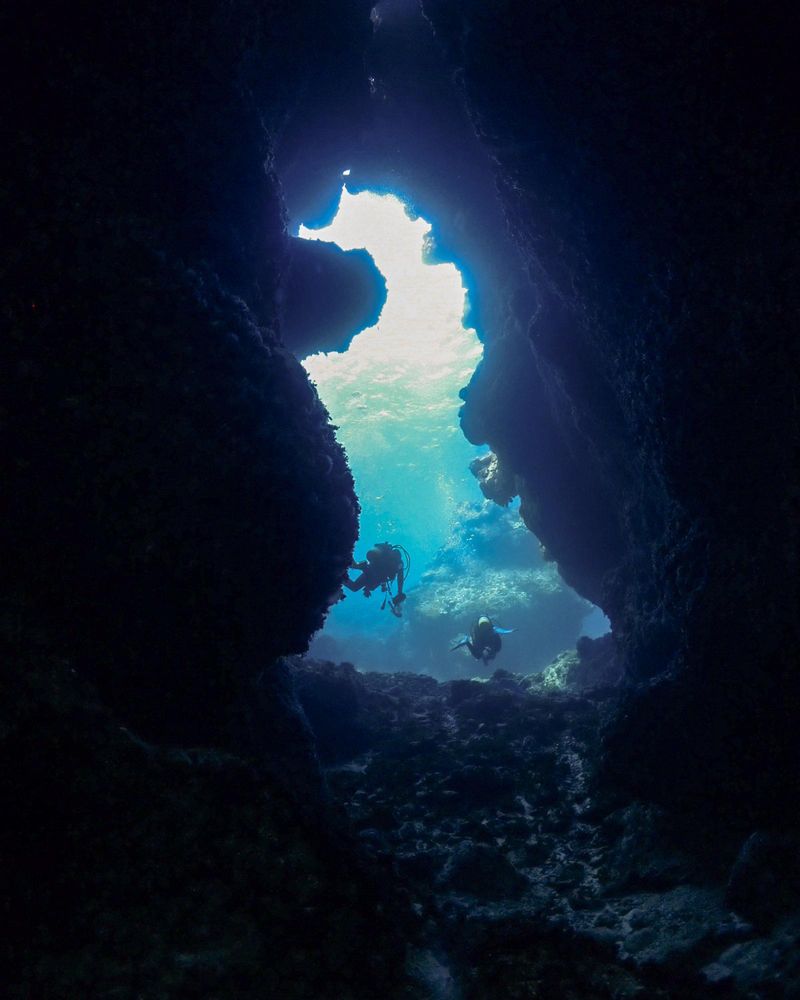
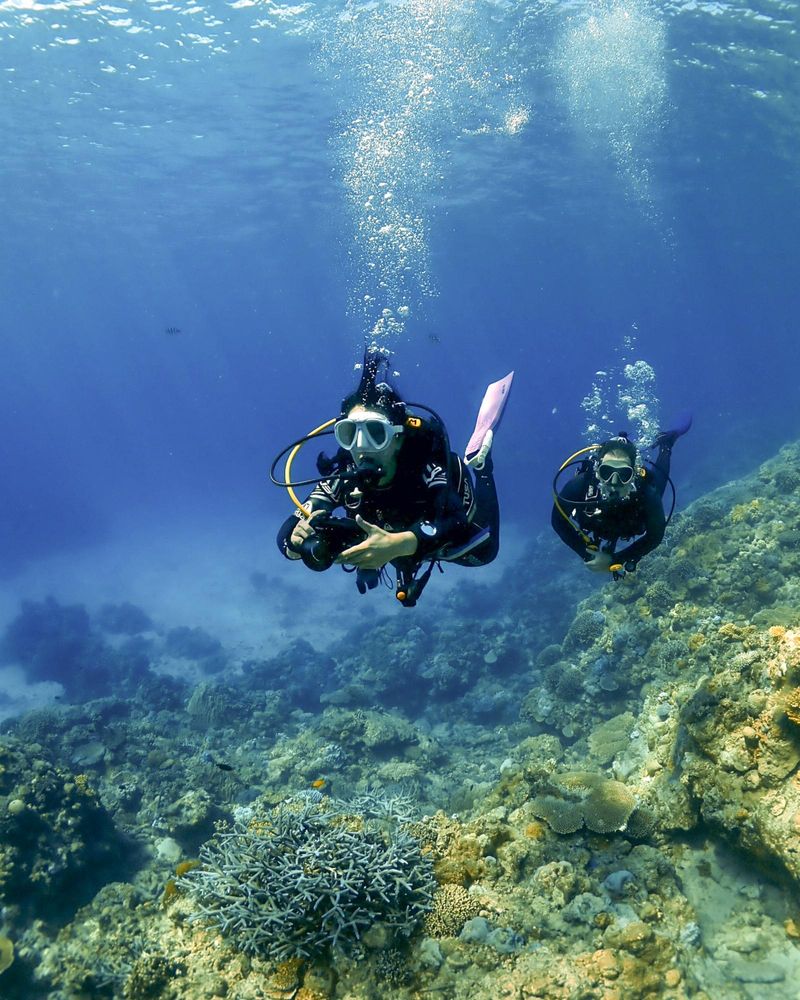
Our last dive of the first day took us to the Chibishi area near Kamiyama Island, and the underwater atmosphere immediately felt different.
Located closer to Naha than some of the other Kerama dive sites, Chibishi is known for its deeper blue water, rocky formations, and occasionally stronger currents. Compared to calmer reef garden dives like Mae Island, the underwater landscape here feels a little more dramatic and exposed.
Average Depth 5 – 15 metres (Max 20m)
Experience Level Beginner to Intermediate
Main Highlights Caverns, swim-throughs, reef sharks, macro life
Depending on the exact dive site and conditions, divers may encounter larger schools of fish, reef sharks, and deeper reef structures. Because of the slightly more dynamic conditions, this area can feel more adventurous than some of the shallower beginner-friendly dive sites.
If you are looking for a dive site with a little more variety and a more open-ocean feel, Kamiyama and the Chibishi area are definitely worth considering.
Kuefu Island
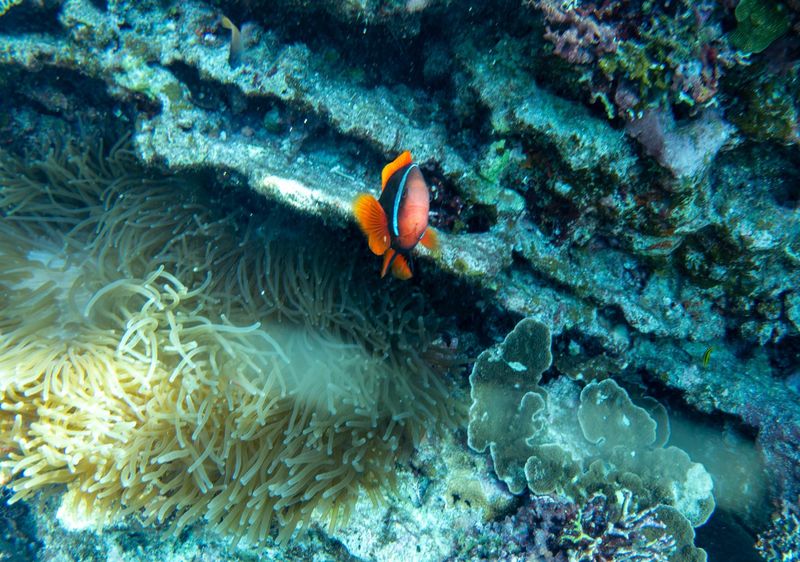
On our second day, we headed back to the Kerama area, but this time we were diving around Kuefu Island.
Average Depth 5 – 12 metres
Experience Level Beginner / Open Water
Main Highlights Coral bommies, sea turtles, underwater photography
Like Kamiyama, Kuefu is part of the three uninhabited atolls that form the Chibishi Islands. If Kamiyama represents the moody, adventurous side of the reef system, Kuefu is its bright, serene counterpart.
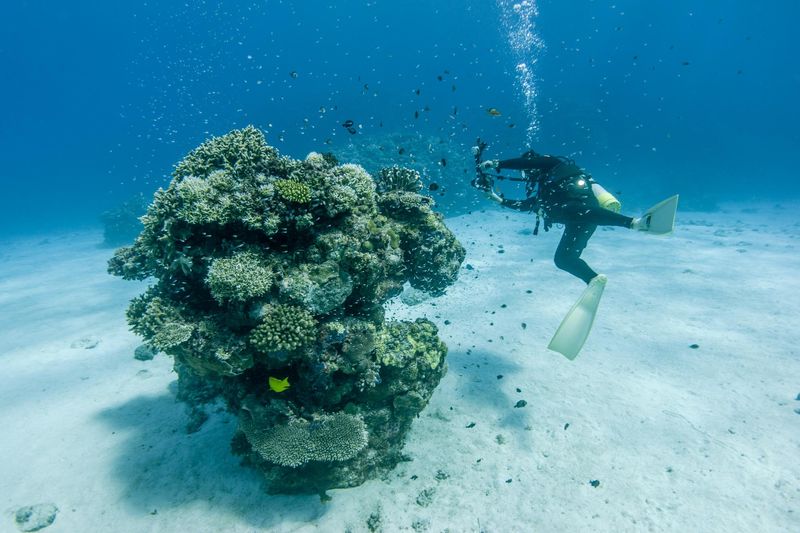
Kuefu is known for its shallow sandy seabeds and scattered coral bommies rising gently from the ocean floor. Compared to some of the more dramatic dive sites in Okinawa, this one felt incredibly relaxed and peaceful.
Because much of the seabed is made up of white sand, the sunlight reflects beautifully underwater, making everything feel brighter and more vibrant. Combined with colourful coral formations and reef fish, it also makes Kuefu a fantastic location for underwater photography and filming.
The dive site is usually moderate in depth, making it suitable for a wide range of divers, including beginners.
When we visited, the visibility was around 30 metres, which made everything feel incredibly open and blue. The water temperature in October was around 28°C, so it felt warm and very comfortable throughout the dive.
Kuro Island (Kuroshima)
Our next excursion took us to Kuroshima, an island positioned in the central-northern section of the marine park. Compared to the flat sandscapes of Kuefu, the topography here offers a different diving experience
Average Depth 10 – 20 metres (Max 35m)
Experience Level Intermediate / Advanced
Main Highlights Vertical drop-offs, massive hard corals, pelagic fly-bys
Kuroshima is highly celebrated among local guides for its deep slopes and dramatic vertical walls. Two large, jagged rock pillars pierce the surface on the north side, giving the primary dive site its name: Twin Rocks.
Because of the reef structure and deeper sections, divers here often encounter a wide variety of marine life, including colourful reef fish, schools of tropical fish, and occasionally sea turtles around the reef edges. Depending on the season and current, larger species may also pass through the blue.
On our dive here, we reached a maximum depth of 19 metres and spent almost 40 minutes underwater. The conditions were calm, visibility was still fantastic, and it felt like the perfect balance between relaxation and exploration.
If you enjoy reef diving with a little more depth and variety, Kuro Island is definitely worth adding to your Okinawa diving list.
Uchizan
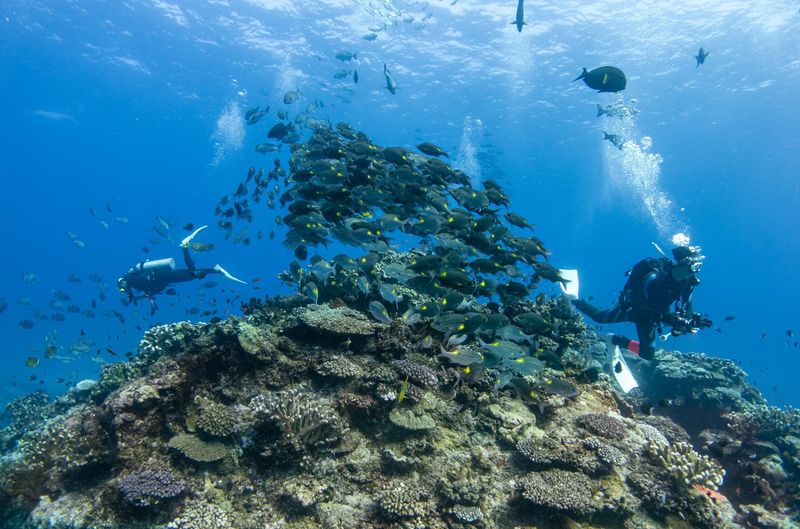
If you are an advanced diver seeking adrenaline, Uchizan Shoal is easily one of the most exhilarating and action-packed dive sites in the entire Kerama Islands region.
Average Depth 15 – 25 metres
Experience Level Advanced Open Water
Main Highlights High-speed drift diving, schools of giant trevally, seasonal manta rays
Uchizan offers a complete departure from the gentle reef gardens of the inner islands. Situated in an exposed, open-ocean location, the site features a massive submerged pinnacle that catches intense, sweeping ocean currents. Because of these dynamic water movements, you will almost always dive this site as a swift drift dive, often requiring a quick "negative entry" from the boat to get below the surface current safely.
This site is particularly famous for larger marine life. Divers often come here hoping to spot grey reef sharks, large schools of fish such as trevally and barracuda, and, during certain seasons, even manta rays.
We were hoping to see a manta ray since it was at the beginning of the season, but unfortunately, we didn’t. And that’s just part of diving. Seeing bigger animals always requires a bit of luck, and the ocean never guarantees anything.
The currents here can be quite strong, and Uchizan is often dived as a drift dive, which makes it more suitable for experienced divers who feel comfortable in changing conditions and open water.
The Blue Cave (Cape Maeda)
If you are looking for one of the most famous dive sites in Okinawa, the Blue Cave should definitely be on your list.
Average Depth 5 – 12 metres
Experience Level Beginner / Snorkeller
Main Highlights Massive schools of sweepers, cavern topography
Located near Cape Maeda (Onna Village) on Okinawa’s main island, the Blue Cave is known for its glowing blue water, created by sunlight reflecting through the cave entrance. When conditions are right, the water inside lights up with an almost surreal blue colour, which is exactly how the cave got its name.
Unlike some of the deeper dive sites around the Kerama Islands, the Blue Cave is suitable for both beginner divers and snorkellers, making it one of the most accessible underwater experiences in Okinawa. Because of its popularity, it is also one of the busiest dive sites on the island.
Besides the cave itself, divers can usually expect to see colourful tropical fish, coral formations, and schools of fish gathering near the entrance. The cave is relatively shallow, which makes it a great option for those who are new to diving or simply looking for a relaxed and visually impressive underwater experience.
USS Emmons Wreck, Kouri Island
For history buffs and deep-diving enthusiasts, the USS Emmons is widely considered one of the premier World War II wreck dives in the entire Pacific theatre.
Average Depth 34 – 40 metres
Experience Level Advanced Open Water + Deep Speciality/Technical
Main Highlights Intact WWII destroyer, historical artefacts
Located near Kouri Island in northern Okinawa, this site is home to the remains of the USS Emmons, an American destroyer sunk during World War II in 1945. Today, the wreck rests at around 40 metres deep, making it a site mainly suitable for advanced and technical divers.
Unlike colourful coral garden dives, this experience is more about history, scale, and atmosphere. Covered in marine life and coral growth, the wreck has slowly become part of the underwater ecosystem, attracting schools of fish and other marine species.
Because of the depth and conditions, divers usually need an Advanced Open Water certification at a minimum, and experience with deeper diving is highly recommended.
I didn’t dive here during this trip, but as someone who loves wreck diving, especially after diving in places like Coron in the Philippines, this would definitely be high on my list if I return to Okinawa.